iBankCoin

NO PLACE TO HIDE: REITs, Utes Blow Up As Market Rout Crushes the Souls of Merry Investors

This was a rancid day for longs, even worse for parma-bull retards.

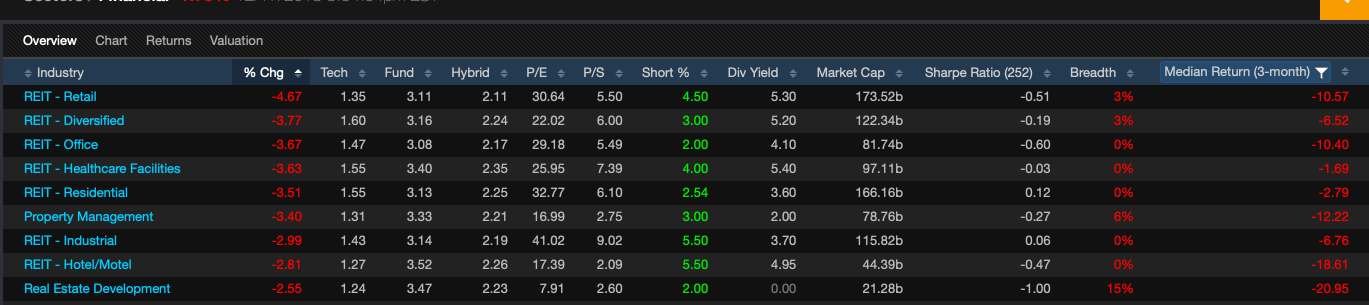
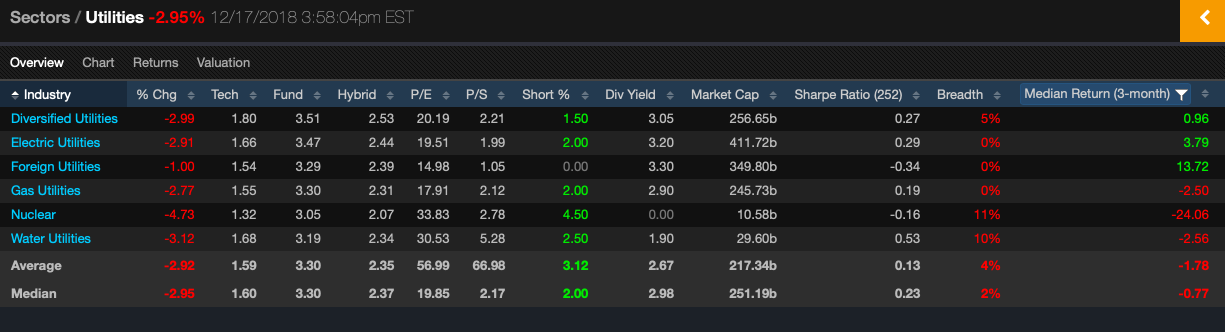
Consider this, there is no place to hide now but gold and bonds. You have been dispatched. The safe haven status for utilities and REITs has been revoked with today’s broken elevator actions.

As such, I stepped in and bought DRV — triple downside REITs. Fuck the REITs and the horse they rode in on. To sum up today’s moves: stopped out of APPF, bought FAZ at $13.13, bought EGO at $0.64. I maintain positions in a few tech stocks, GE, and a slew of precious metal trending up. My largest position is TLT. I intend to make most of my money on the upside, when and if this FUCKER ever stops going lower. While REKT in my long term account, I’m okay with transitional losses, as I get my feet wet on hedging and cementing a longer term bearish narrative in my investment planning.


Comments »

The Bond King Says: WE’RE IN A BEAR MARKET

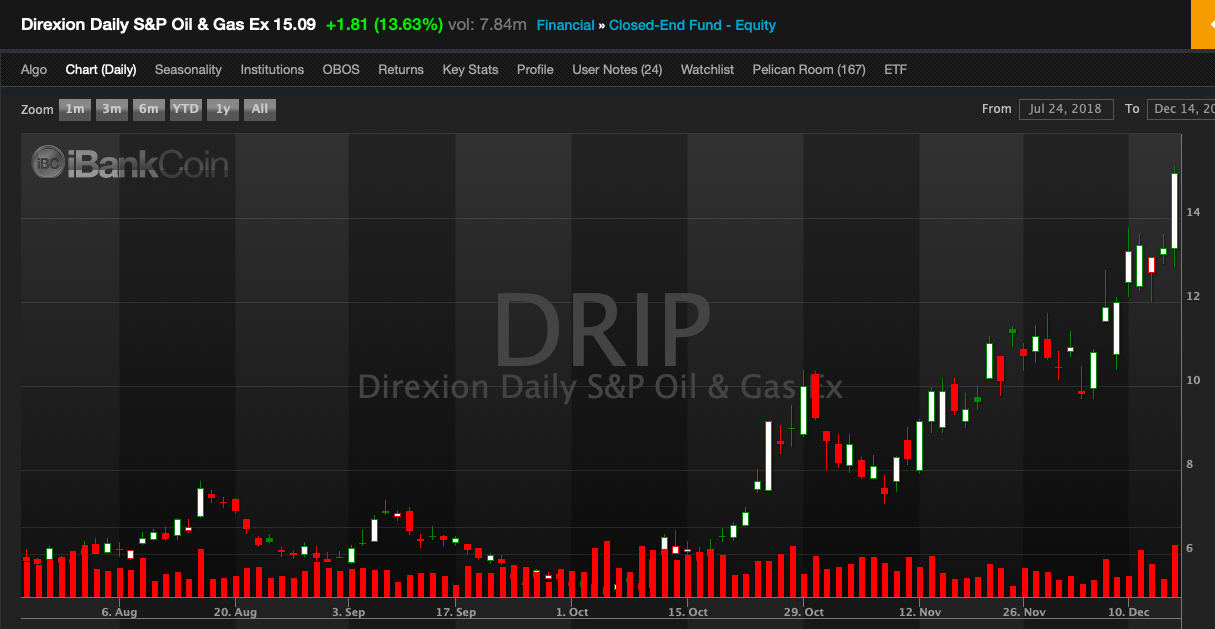
Does it matter if we’re in a bear market or not? It’s just a label. But prices are sucking lower and bulltards are getting wiped the fuck out clean — removing them physically from their money. I’ll have you know, I am getting LIT THE FUCK UP in my long term account today, but somewhat hedged in my short term with gains in gold, FAZ, and DRIP.

I stepped in and bought some EGO today, thinking the recent bull market in gold lifts junior miners like EGO. There is a potential large upside in a piece of shit like EGO. I do not pretend to know the first thing about gold mining — but I know sentiment and numbers and people are scared AF, in search for havens.

My longs in my trading account will remain until my 10% stops are met. The point of having both longs and shorts is to profit from the spread, which I am doing so today. I was not 100% short because I was cautious. Today I am emboldened by the action to get even MOAR bearish — but, truthfully, it’s times like this that produce sellers exhaustion or some sort of tweet that buoy stocks.

My bias is inexorably for lower prices. However, I am not positioned to make a grande sum on the downside just yet. I am uneasy to short too much into the hole.

Here’s that Gundlach clip.

Comments »

Gundlach

DoubleLine Capital CEO Jeffrey Gundlach took a shot at passive investment strategies such as index funds on Monday, declaring the investing strategy a “mania” that is causing widespread problems in global stock markets.

“I’m not at all a fan of passive investing. In fact, I think passive investing … has reached mania status as we went into the peak of the global stock market,” Gundlach said, speaking with CNBC’s Scott Wapner on “Halftime Report” in Los Angeles.

“I think in fact that passive investing and robo advisers … are going to exacerbate problems in the market because it’s hurting behavior,” Gundlach added.

Gundlach’s DoubleLine actively manages clients money and has more than $120 billion in assets under management, according to the firm’s website. The exchange-traded market has grown to a $5 trillion juggernaut since the SPDR S&P 500?s inception in 1993. Investors shrugged at the recent recession fears and economic concerns, adding more than $16 billion to U.S.-listed ETFs in the week ending Dec. 13, according to FactSet.

“I wouldn’t advise anyone to be a passive investor,” Gundlach said. “My strongest advice is to not invest in passive U.S. equity funds.”

He said his best idea for 2019 is “capital preservation.” Gundlach defines that as “high quality, lower volatility, lower duration bond funds” he said.

On the flip side, Gundlach said “the worst thing you can do is what everybody has done: Crowd into S&P 500 index funds because that’s the most expensive market.”

The investor made correct predictions for 2018, including a drop in stocks on rising yields and declines in Facebook and bitcoin. He thinks the stock market is headed lower next year, calling for the S&P 500 to fall below the lowest level it hit this year.

Comments »

GOLD, BONDS, DOLLARS — NOTHING MORE

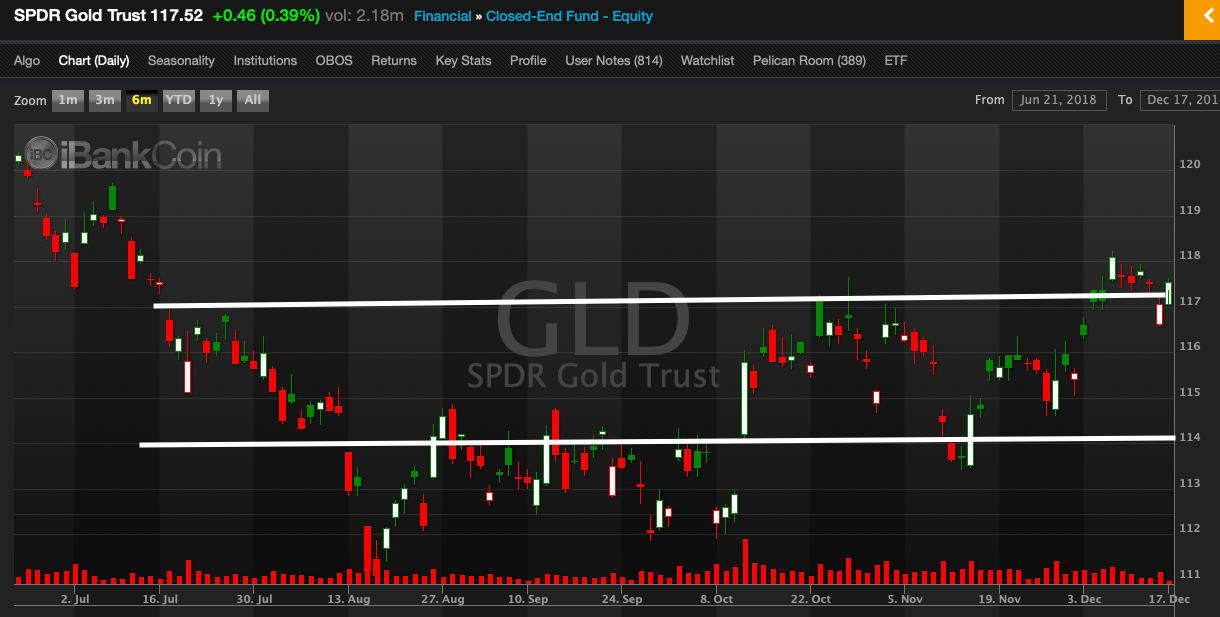
Want to survive the fires to come? Get long TLT, GLD, and some god damned UUP.

As markets struggle, these three vehicles are flying higher, both wonderful and resplendent. With gold, we’re at a point in its narrative that demands attention. This is a bull market in the making, believe me.

My exposure to precious metals is EXK, NUGT, AU, and KL. My largest position in my trading account is TLT, and I own zero UUP — mainly because I have plenty of cash on the sidelines — currently at 20%.

Yes, markets can bounce. Yes, you should have long positions for the long term and even some in the short term. But if you’re looking for some assets that will withstand the bear market, only bonds, gold, and dollars work.

Comments »

Financials On Edge of Breaking Lower Again

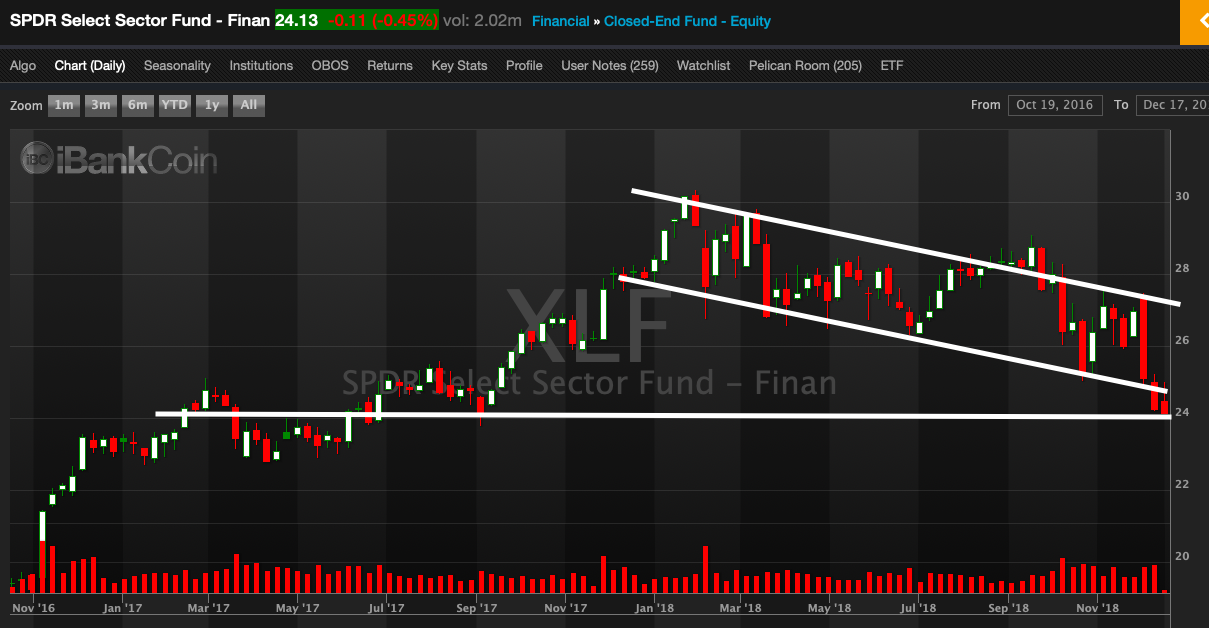
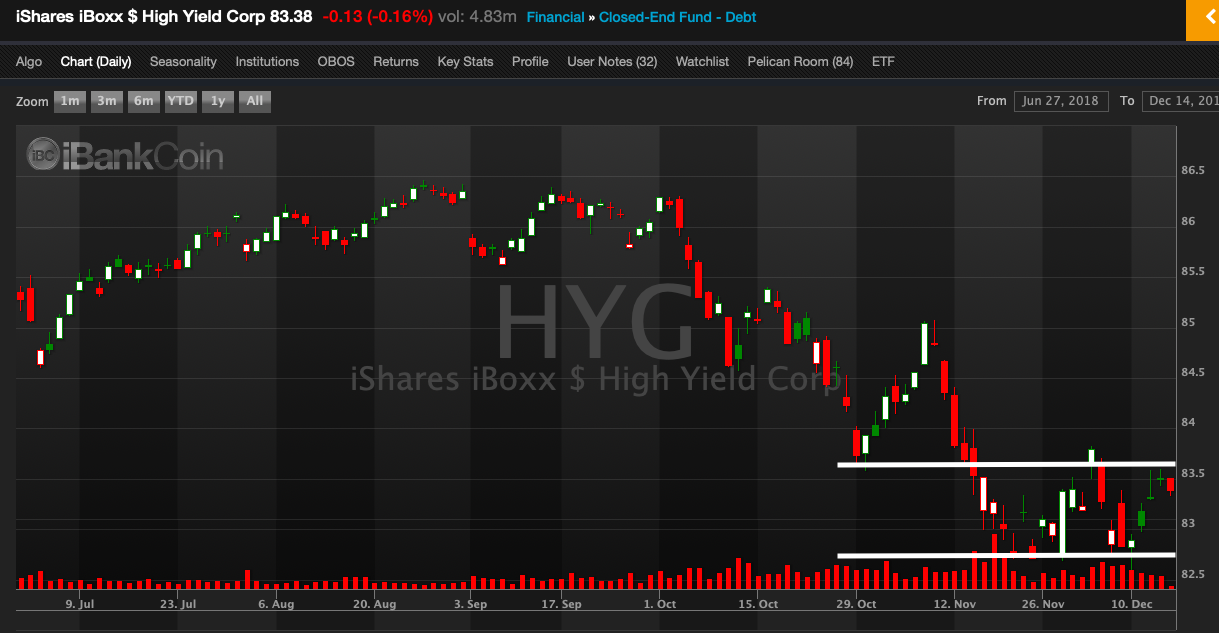
Nothing in credit happens without affecting the banks. Ergo, as HYG drops and the prospects of high yield worsens, logic dictates so should the banks.

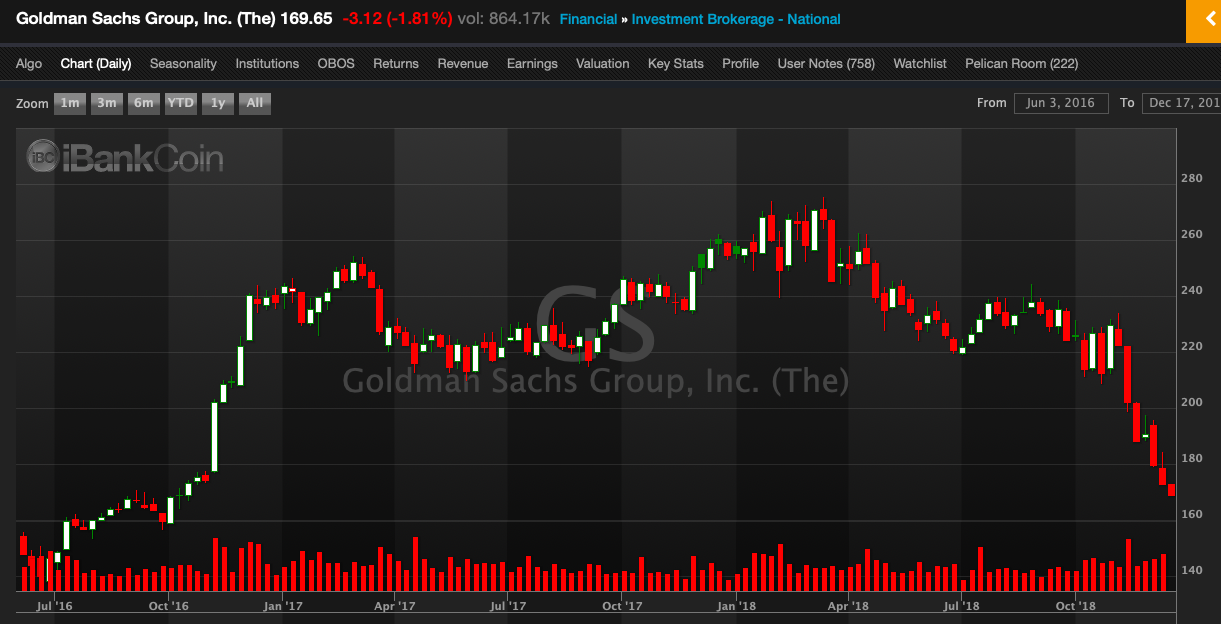
Goldman continues to break down.

More specifically, the XLF is below its downward barreling channel and looking like it wants to plunge.

I went long FAZ this morning.

Comments »

Trump Bellows On Twitter About Rate Hikes Again

The non-stop bitching on Twitter by the PRESIDENT OF THE UNITED STATES makes me feel like he’s just sitting there in an office, like a prisoner, without any power. What is the point of his complaints if nothing is ever done to remedy the situation?

Here’s Trump complaining about the Fed again.

Here’s what you need to know.

Futures are -130, a complete reversal of last night’s gains. Gold is higher, yields are flat, and we have 10 trading days left in 2018.

If you’re running money, you’re staying small for the balance of 2018 and positioning for an early 2019 market rout.

Comments »

How to Protect Yourselves in the Coming Bear

Don’t be ridiculous and keep believing this is an ordinary sell off. We have a full fledged rout underway, now braced with a burgeoning credit crisis in high yield. What’s at the center of these fears is a slowing economy. Bear in mind, the last two recessions were met with dramatic 70% declines in earnings.

At the same time, it’s wholly absurd to believe this is anything like 2008. Okay? Don’t always draw for those straws. Negativity is a cancer and infects the mind and turns people into ideologues. I have my opinions and am preparing for the worst — but price action is everything. This crisis can unfold this week, next month, 1 year, or 5 years from now. We will only know it when the prices show us it’s time to panic.

As of right now, I believe it’s time to entertain the idea that this could get significantly worse. Corporations have borrowed trillions of dollars the past decade, allocating most into share buybacks. This year alone, $200 billion in buybacks were made, effectively leveraging into businesses. The way this unravels is credit markets freeze, corporations forces to raise capital via secondary offerings — dilution CRUSHES the helmets of those long stocks.

But before we start telling that story, let’s figure out how to protect short term and long term accounts — something I am very focused on and will be talking about this week in Capstone.

Here are some quick ADD friendly bullet points.

Old, traditional, companies who pay dividends, like TR and PG, are attractive now — because the Fed might pause. If the Fed stops hiking, old man stocks can elevate because cost of capital will remain cheap, negating the premise for valuation contractions.

Maintain diversified in all sectors, including Utilities. Consider that major drawdowns are rare. In 1929 and 2008, the market dropped by 42% and 34%, respectively. In the 2000 market rout, the market only fell 11%, while the Nasdaq dropped much, much more. Diversification is the only way to invest long term.

Draw from two pools of stocks for your investments: conservative and growth. Whichever is outperforming is where you should stay focused.

Hedge long term accounts with allocations into bonds (TLT) and gold (GLD). I know gold has been shit in recent years, but it has been performing much better and with BTC destroyed, it stands to draw in a lot of lost money looking for safe haven.

Inverse ETFs should be used for swing trades only. DO NOT hold them longer than 1 week — due to time decay. You can always buy them back.

Assume your initial purchase point will be wrong. Start positions small, no greater than 5%, and never exceed 15% of an overall account.

If you have a long term thesis for a stock, consider dollar cost averaging.

If you’re trading position is down 10%, ditch it. If your trading position loses it’s catalyst, you have to sell it. Review positions every single day and ask yourself  “would I buy this today?” If the answer is no, you might want to sell it.

I can droll on about these rules you should follow. Some of the more experienced readers here are probably rolling their eyes at some of these — but, believe me, I have a lot of readers new to the market.

The number one rule in any bear market is to survive — live to fight another day. If you’re simply buying and holding — hoping for respite, you’re a victim.

Comments »

A New Credit Crisis Emerges: Leveraged Loan Market

First, let me preface by saying market crashes are RARE events and credit is protected by government. In order for a full blown crisis to foment, they’d need to lose total control. Again, RARE event.

Having said that, I’d like to touch upon something you’ve been hearing about and reading about online — the leveraged loan market. This relatively new and chic form of financing has quickly emerged as the preferred method by which private equity FUCKTARDS use monopoly money to seize control of real businesses and then leverage those balance sheets in order to make EXTREME commissions.

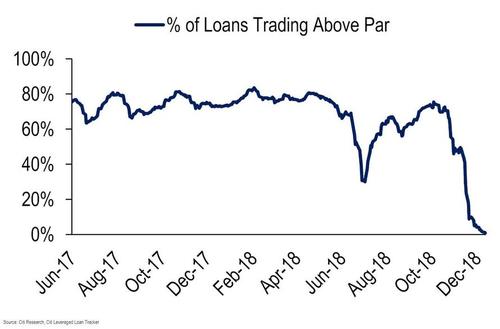
I have a lot of fancy graphs to display in this post, but first this from CNBC and then FT.

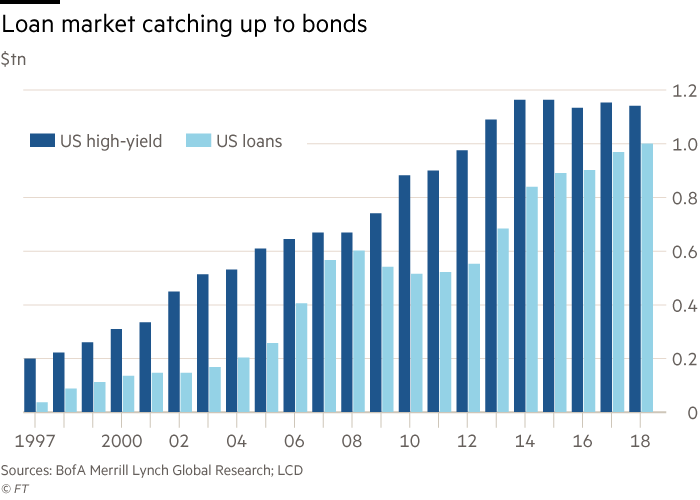
Source: FT

An important shift in how companies finance themselves has reached a milestone. The leveraged loan market has officially become a $1tn asset class and is catching up fast with US high yield or junk bonds.

Since 2010, the leveraged loan market has doubled in size from $500bn while US high yield has expanded $250bn to $1.1tn, according to Bank of America Merrill Lynch.

The growth in loans reflects a post-financial crisis shift away from being a “private bank-loan model to a thriving syndicated market with hundreds of participants” that has coincided with retail money flowing into the market, says the bank.

Money has continued to pour into loan funds, where interest rates are floating and adjust higher as the Federal Reserve tightens policy.

That kind of demand has helped fund and drive a record era for merger and acquisitions. “A higher proportion of capital raised today goes towards LBOs [leveraged buyouts] and acquisitions than was the case in 2010,” says BofA, noting how half of money raised since 2016 has reflected M&A, up from a level of 30 to 40 per cent at the beginning of the cycle.

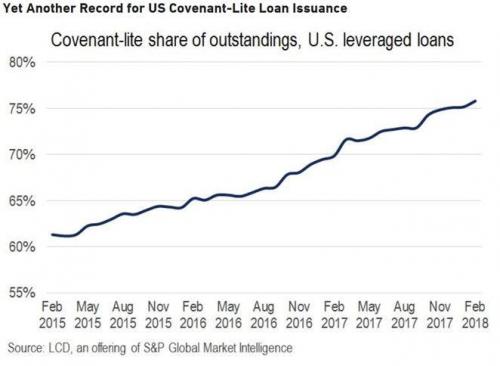
As loans increasingly gain sway, the issue of weakening terms or covenants has been ignored by investors in their hunt for yield. That may be an approach they come to rue once the current cycle turns.

Recently, S&P Global warned investors that weak lending terms for loans posed a risk as the credit cycle approached a peak and deal making had surged in recent months.

The quality of covenants — the protections in a bond or loan document that can limit the amount of debt a borrower can take on or how much it can pay its equity investors in dividends — has steadily weakened in recent years. That has allowed companies to win better terms from investors.

In the past, loans were prized in part for being higher in a company’s capital structure than junk-rated debt. But as more companies pay off their junk bonds via loans, investors face the prospect of being exposed to greater losses in their next credit downturn.

“While we think that compromising on covenants is a natural outcome of where we are in the credit cycle, and that the cost of doing so is low in today’s environment, it does pose a threat for recoveries when the next default cycle arrives,” says the bank.

Sounds awfully reminiscent to the great wonderful credit crisis of 2008, when homeless men were buying mansions and tapping into their HELOCs to buy drugs with, no?

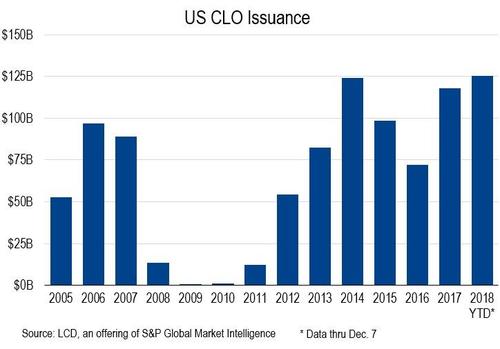
Current CLO issuance, the repackaging of leveraged loan horseshit, now ~50% of overall market.

This is now ~5.5% of GDP.

TIMBERRRRRR.

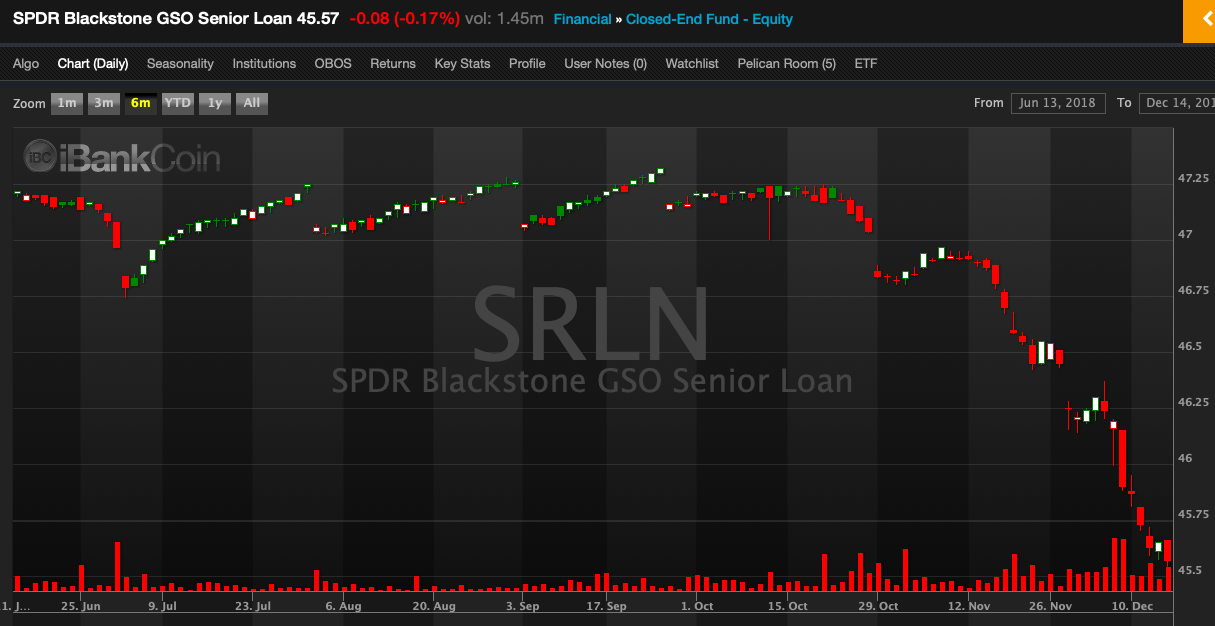
Perhaps the most dangerous of all is the packaging of these ILLIQUID AF products into ETFs. The ETFs trade wonderfully, but the underlying product usually has a 1 month settlement time. In other words, these ETFs may one day pose as roach motels and exacerbate an already stressed market.

How are those ETFs fairing? Not good.

Comments »
HOW DO YOU LIKE MY $DRIP?

NOTE: The Capstone Programme went live this week. Book your appointment now and be taught what you need to be told.

Motherfuckers.

I booked a 19.5% gain in WPM. My largest holding is TLT — higher by 0.35%. I’m in a 30% cash position, supremely positioned to buy into the blood.

I won’t bored you with more fears of a credit crisis, but you should be monitoring SNLN, SRLN, and HYG.

DOWN 500. BULLS CAUGHT A VICIOUS BEATDOWN. EXPECT MOAR COME MONDAY.

Off to drink some gin.

Comments »

SHORT OIL

A few narratives at play here with short oil.

1. Slowing global growth
2. Trump squeezing Saud
3. Oversupply
4. Long term switch to electric cars
5. Technical deterioration
6. High yield pressures

On the matter of high yield. We’re at the top end of the recent channel, poised to break lower.

Oil itself isn’t attractive here. More importantly, the underlying companies will soon become extremely distressed with the price so low. I suspect share prices will dive lower, in anticipation of these companies forced to raise capital via secondary offerings.

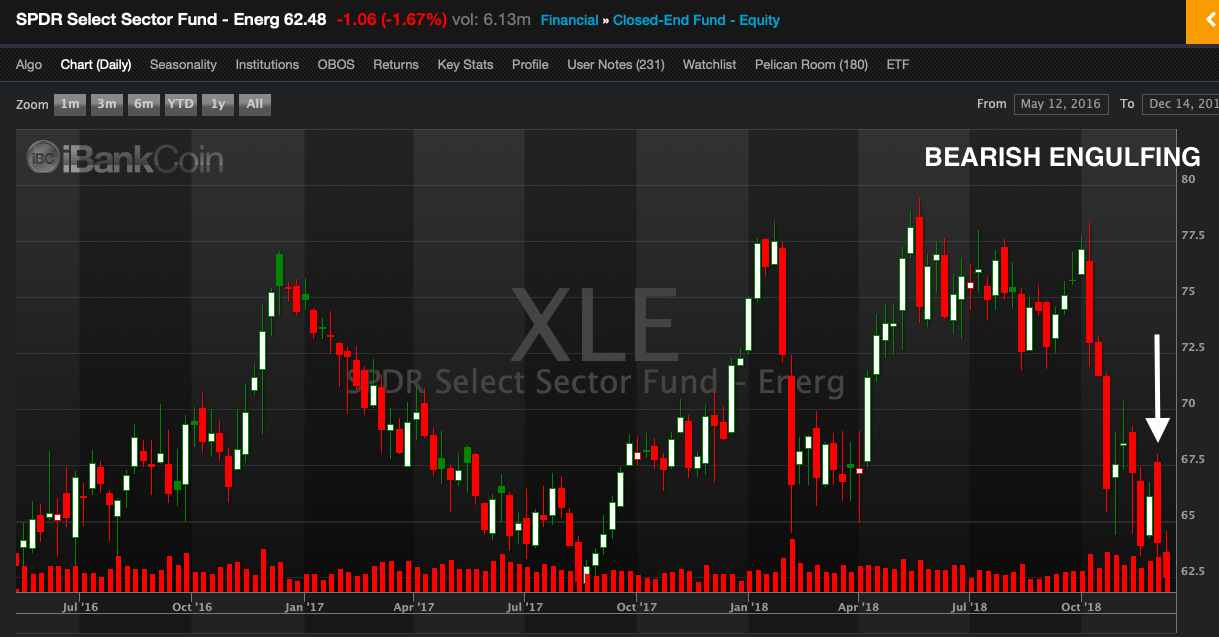
Bearish engulfing pattern is in effect.

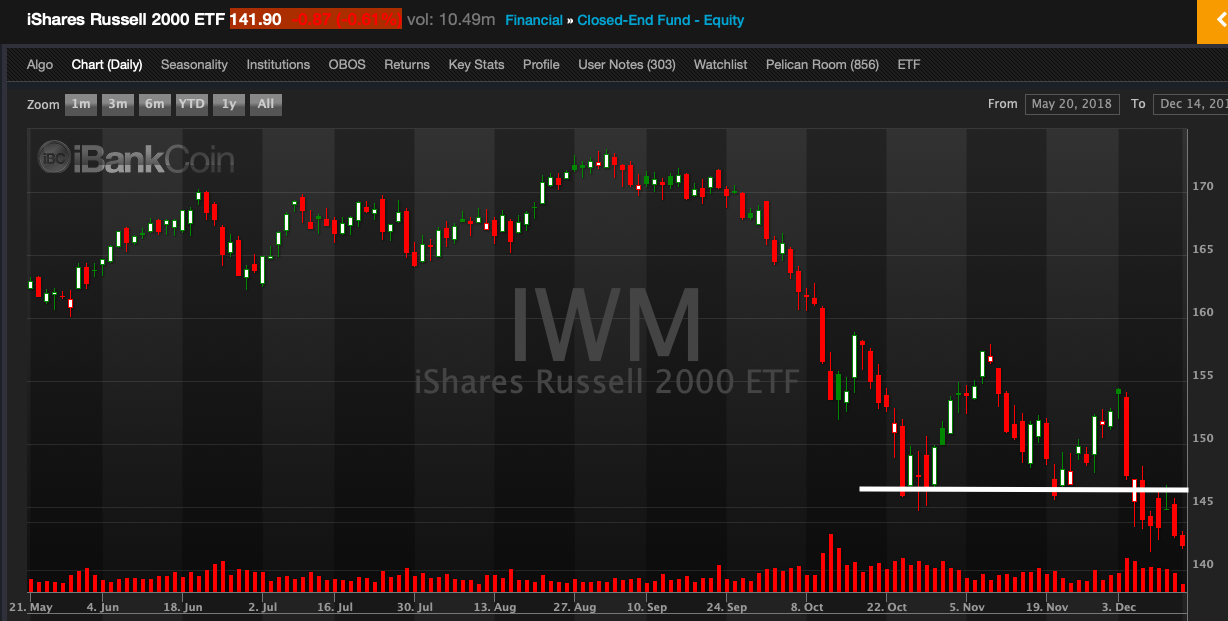
Lastly, we have a clean breakdown below recent trend in the IWM, small caps. I expect small caps to underperform markets, and also provide insight into the overall mood of the plebeian investor.

Top picks: AU, NUGT, TLT, DRIP

Comments »