iBankCoin
Home / 2017 / June (page 4)

Monthly Archives: June 2017

Liberals Get in Here and Redpill Me on Why Trump’s Travel Ban is Bad for America

Tucker Carlson debated a former State Department official during the Obama years, David Tafuri, over Trump’s travel ban. Sadly, Tucker made quick work of him — reducing Tafuri into a smoldering heap of shit — blathering emotionally about how awesome Somalians are. Since I couldn’t give a flying fuck about any of the nations on Trump’s travel ban, I wondered if any of you good lads could ‘redpill’ be on why we should be permitting military-aged men from Somalia into America.

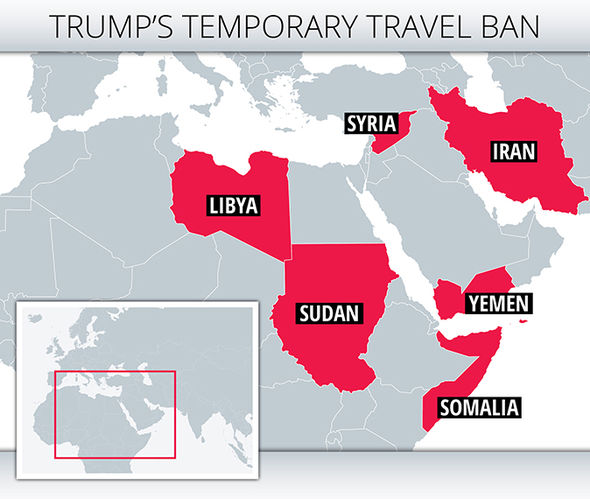
Here are the nations on Trump’s evil travel ban.

I’m quite malleable. Have at it.

BONUS! MSNBC ran out of things to talk about on ‘Hardball’ tonight, so they aired a repeat of ‘Trump’s lies.’ How delightful.

Comments »

Buffett Discusses How He Overcame His Fear of Public Speaking

PBS did an interview with Warren Buffett, in what looks like a god damned Raymour and Flanigan. Most of the interview was regurgitated horseshit: buy America, stocks go up forever, suck my dick, yadda, yadda, yadda. Then Warren demonstrated he wasn’t a money making robot and started to discuss how he overcame his fear of public speaking.

Watch.

I was always shy in high school and only conjured up the courage to approach girls when with my friends, in the safety of a pack. I never had an issue making friends, since I played sports and was a fucking devil in school. But I didn’t have the ability to get up in front of a room and make a speech, until I became a stockbroker.

The firm I started at was incredibly focused on sales, almost like a boiler room. As a cold caller, every morning a seasoned broker came into the pit and called on us one by one, randomly, to pitch him. They were always dicks and made us feel like absolute shit. I think it was the constant shaming that broke me out of my bubble. Fear of rejection is the root of being scared to speak publicly, talking to women, prospects etc. Once you’ve been rejected a thousand times, one thousand and one is nothing.

The owner of the firm would give inspirational speeches by microphone at 8am and 4:15pm, each and every day, with no exceptions. Brokers who came in late to his meetings were fined $1,000 on the spot. If you were a cold caller and walked in late, you were fired. He was an amazing orator, with the gift of gab that others strived to replicate. He said many things that stuck with me all these years and I reached out to him a few years ago to let him know how much I appreciated his efforts — even though at times his callousness bordered on evil.

For me, breaking out of phone fear or aversion to public speaking was broken by trial and error, constant training, and seeing my hard work translate into sales and dollars in my pocket.

How did you homos break the fear, or are you still afraid to ask for hamburgers at your local Macdonalds?

Comments »

When Will High Yield Credit Crack Asunder, Given Oil’s Recent Debacle?

UBS is out with a magical note today, suggesting that high yield credit might begin to crack, once oil breaks $40 to the downside. This is an amazing thing, since just a year or two ago it was widely believed that crude under $70 meant complete annihilation for the industry.

12 month WTI at or below $40 will elevate 2015-style risks for HY energy. We estimate a sharp or sustained decline in 12 month WTI below $40 or so (vs mid 40s current) will bring back non-linear downside risks for US HY energy. This is modestly below average breakeven oil prices for HY E&P firms. In addition, almost 30% of firms have only adequate liquidity and are dependent on external financing as hedges roll off.

“If oil prices fall to $40 or below, the negative impact on rest of world profits (via commodity-related foreign subsidiaries of US companies) could be a material headwind for aggregate corporate profits, and a prolonged $40 oil price would trigger more stress and defaults in lower-quality HY issuers heading into 2018 (and could prompt banks to tighten lending standards on C&I loans at the margin). While lower oil prices should limit upside inflation risks, market expectations for Fed rate hikes are already well below the median path projected by the Fed, suggesting the market is priced for a dovish outcome already. A supply-driven drop in oil prices coupled with resilient equity markets and financial conditions could still have the Fed tighten policy more than the market expects.”

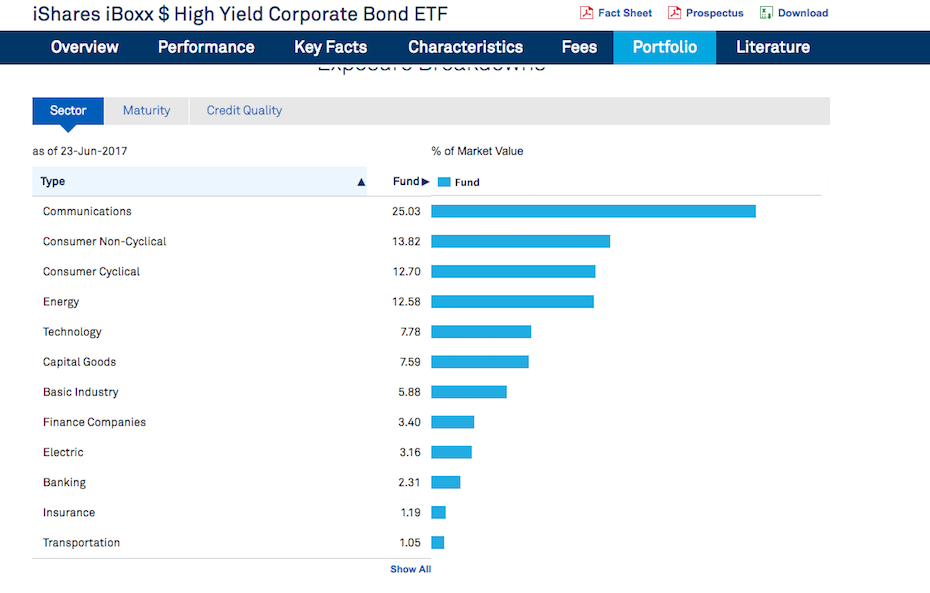
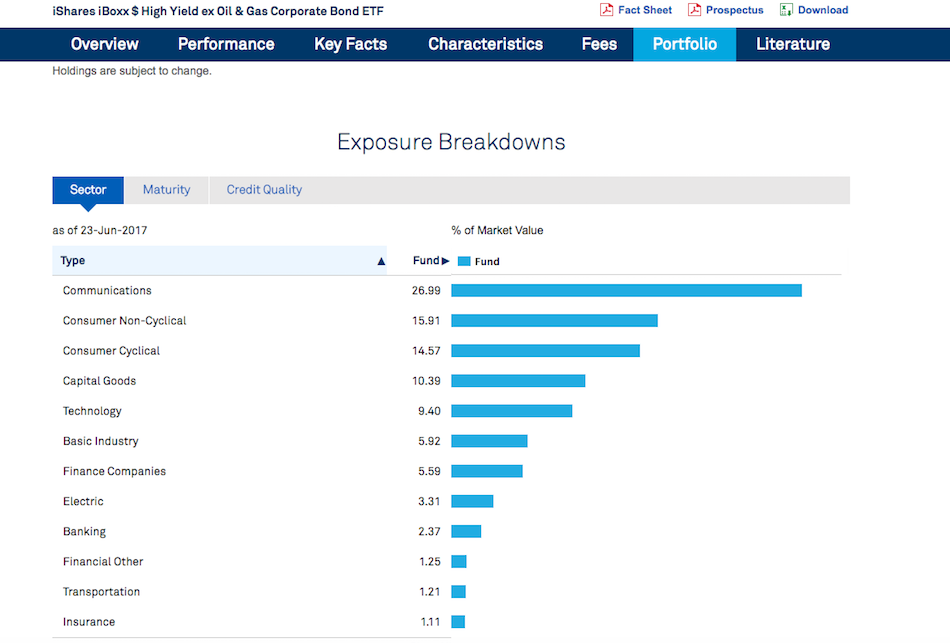
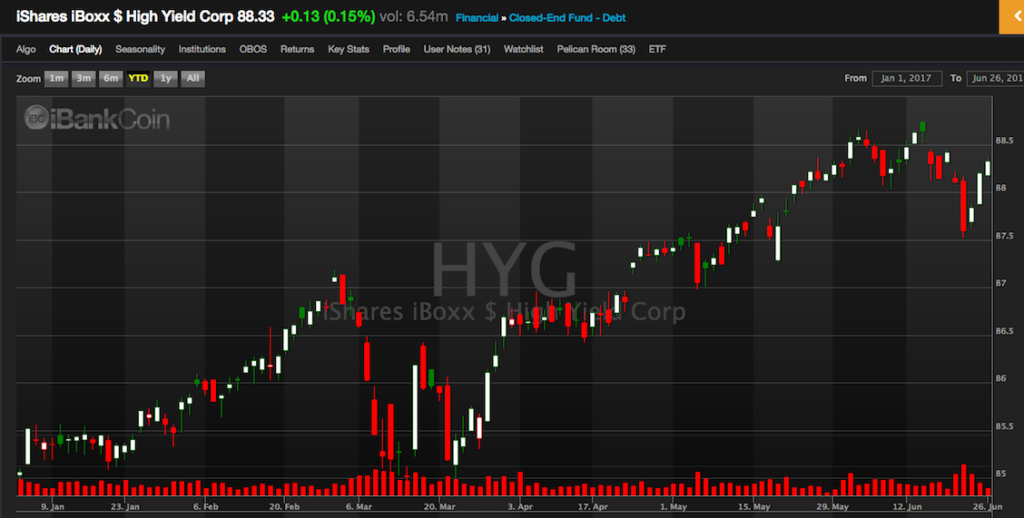
With regard to easy to track high yield credit, people typically watch JNK, HYG or for energy specific HYXE. But this is a total farce, wholly misleading as to the health of the energy bond market. Those ETFs have been rejiggered and are heavily long communications, with barely any energy. Hell, even the god damned energy high yield ETF is mostly communications.
The price action in HYG has been nothing short of stellar.
Is energy credit mispriced?

Yes, absolutely.

But before the market gets around to scaring people in the bond market, there is a pecking order. I recall the sequence of events very vividly, when oil cracked asunder in 2015. First went the stocks.

Oil and Gas stocks are down 40% for the year. Check.

Then went the pipeline.

Pipelines are merely down 4% for the year. No check.

Then went the industrials and then the bond market.

Here’s what you should do to gauge risk in the market, as it relates to energy and high yield.

Watch these pipeline stocks.

ENB, WMB, PAA, TRGP and BPL.

Also watch the stocks of the most levered oil companies.

MPO, CRC, CRK, CHK and BBG will do.

Watch the amount of total debt of companies whose debt/eq rations blow to above 2x. By the time their ratios are at 5x, it’s already too late. I have a screen for that in Exodus. Click here.

The current distressed debt load is now $465b.

Once you see that number balloon, pipeline stocks start to crater, I promise you the market will get torched, taking with it the high yield infants with it.

Comments »

Americans: Why Do You Hate Vitamins?

Your disgraceful lack of awareness, regarding health and fitness, is appalling. Instead of going to the gym, eating salads, and taking daily supplements, you devour burgers, play video games, and drink Red Bulls to garner enough energy to go to work.

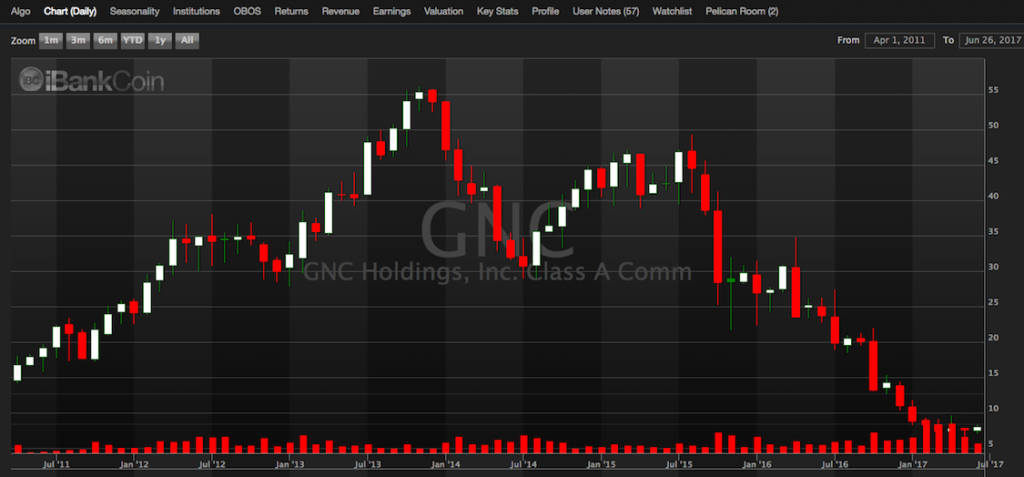
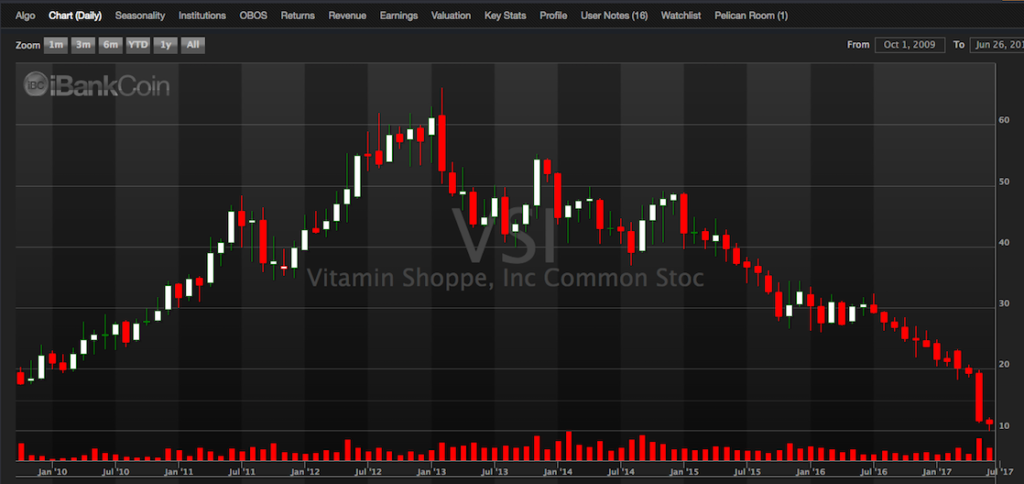
Your indecorous lifestyle is causing the Vitaminfags great disdain. Look at what you’ve done to the chart prices of both GNC and VSI: CATACLYSM.

This loss in value has caused GNC to cease focusing on their in house, retarded, brands and bring in some third party innovation — like VSI. But even with the changes, both companies are relying on new store opening and discounts to drive organic sales. Having said that, are we peak hamburger, trough vitamin?

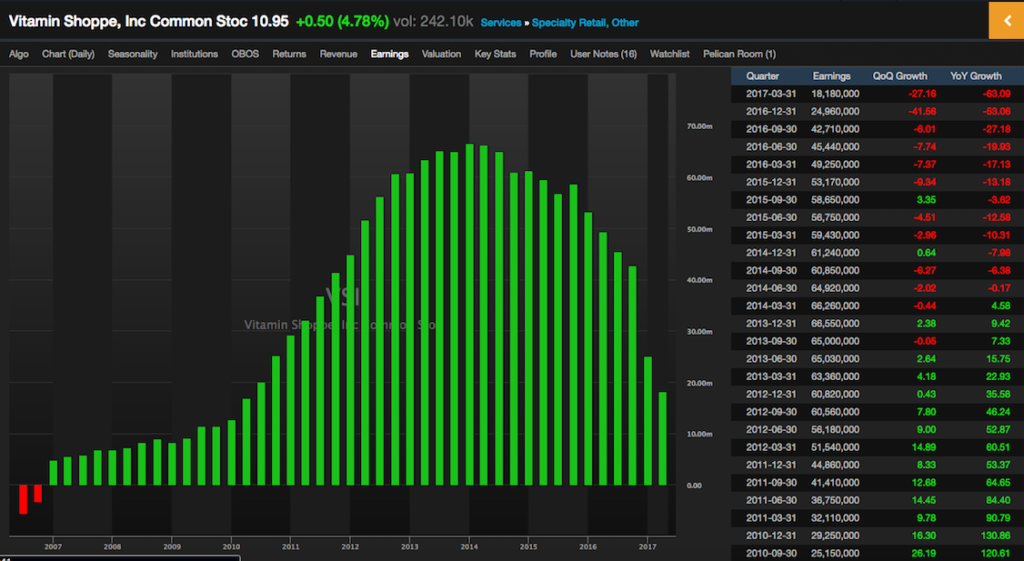
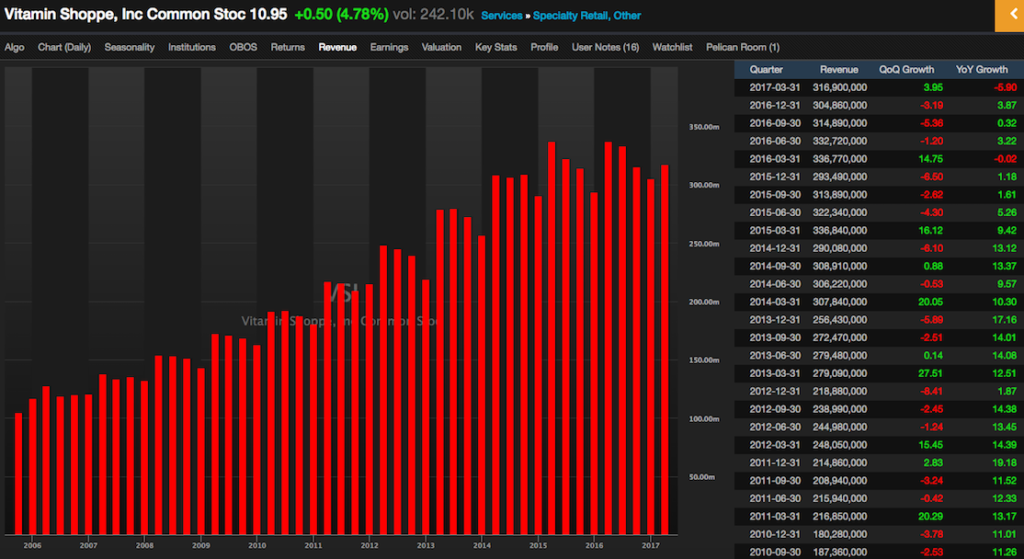
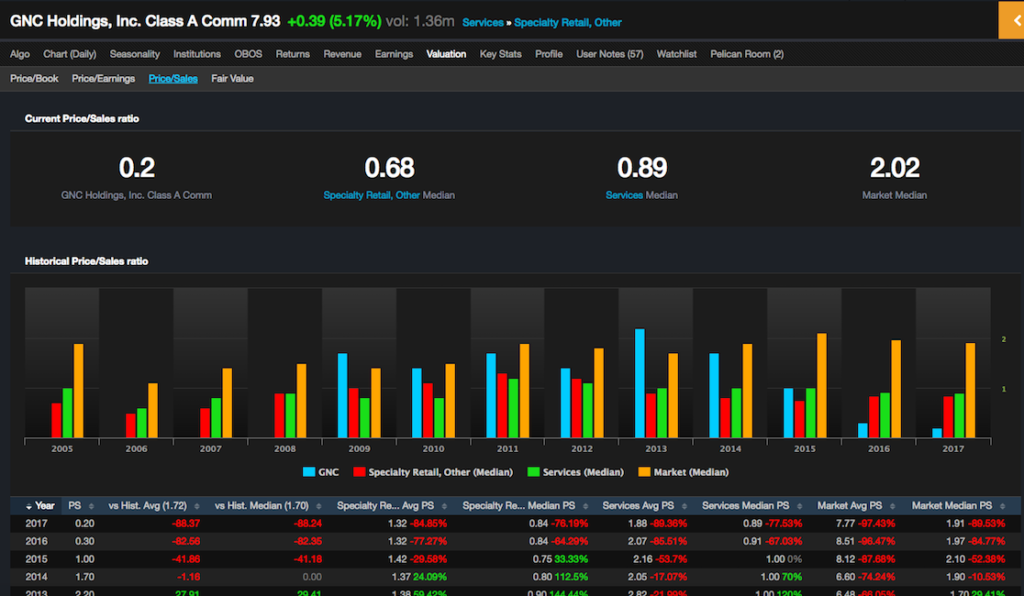
Sales at Vitamin shoppe haven’t collapsed in line with the 70% drawdown in the share price, but earnings have. It’s an interesting trade down here — especially when taking a look at the valuation of GNC at .20x sales, essentially pricing in bankruptcy.

Yes, that’s correct. Just a few years ago, GNC was being valued at 5x of what it is today, on a price to sales ratio basis.

Americans, answer the fucking question. Will you stop living the life of an overweight pig and head into the gym to get back in shape? Remember, abs are made in he kitchen, not the gym, so you’ll have to cut back on those hammed burgers too — replacing it with a nice chalky glass of whey protein.

What do you say?

Comments »

THE TOP IS IN: Bitcoin, Ethereum, Cryptocurrency Nightmarish Decline Accelerates

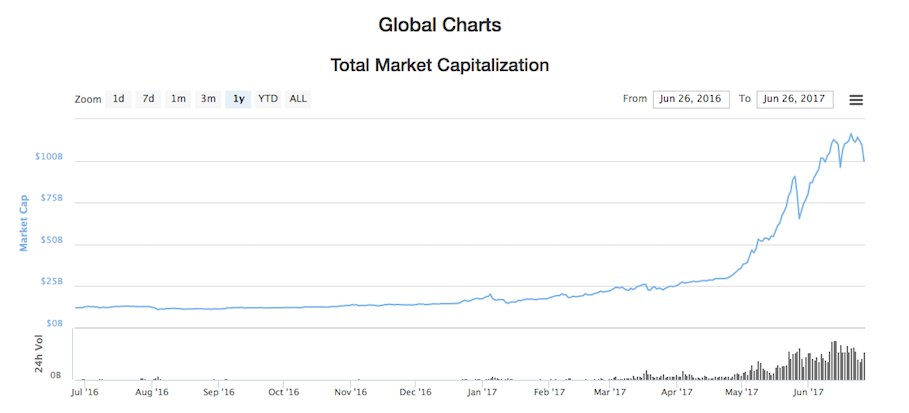
Chartfags get in here and identify this pattern for me?

Is that chart gonna make me feel better about myself in the near term? Is this the end, the proverbial head and shoulders top, for the cryptofaggots?

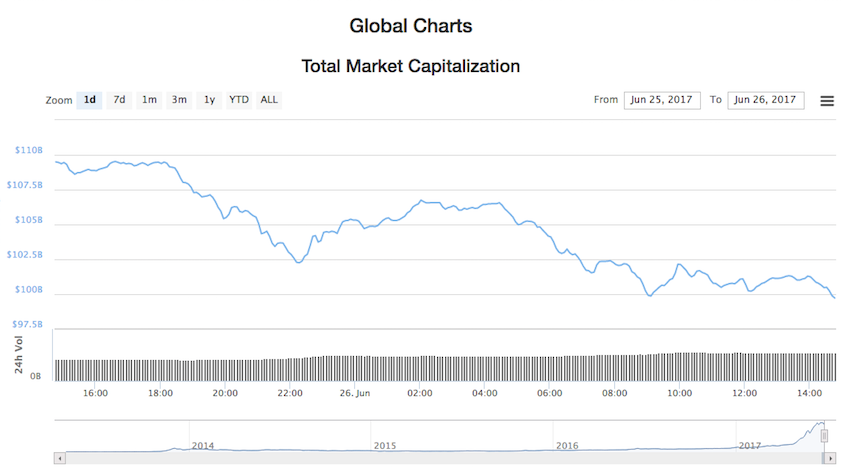
For the day, the market cap for all of the 787 currencies listed is down around $15 billion, or 15%.

If this is like any other top that I’ve ever seen, expect a very small bounce followed by a cruel and long-lasting decline into the pits of hell.

Comments »

TRUMP’S TRAVEL BAN REINSTATED BY SUPREME COURT; MARKETS PLUNGE

The Supreme Court has decided they will hear Trump’s travel ban case in October, which restricts immigration from Iran, Libya, Somalia, Sudan, Syria, and Yemen. How will this great nation survive without the people of Somalia?

I can’t believe we’re even debating this nonsense.

Via SCOTUS

“An American individual or entity that has a bona fide relationship with a particular person seeking to enter the country as a refugee can legitimately claim concrete hardship if that person is excluded,” the Court wrote. “As to these individuals and entities, we do not disturb the injunction. But when it comes to refugees who lack any such connection to the United States, for the reasons we have set out, the balance tips in favor of the Government’s compelling need to provide for the Nation’s security.”

Markets do not like this sort of thing. Anything that is anti-globalism is a direct threat to status quo. Expect tech stocks to get BLOWN THE FUCK OUT. Less immigration means higher wages and zero wiggle room for chicanery. It also means Trump’s original doctrine might be picking up steam, which markets will not like — at all.

Comments »

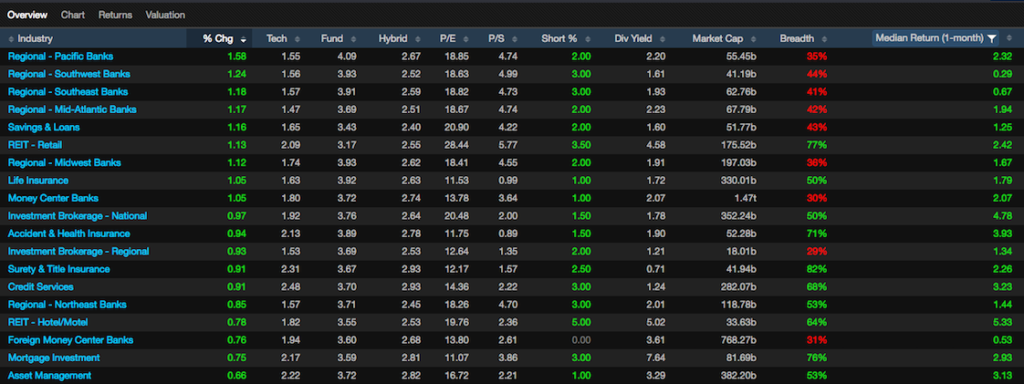
Banks Lead Triple Digit Gains For Stocks; Yield Spreads Tighten

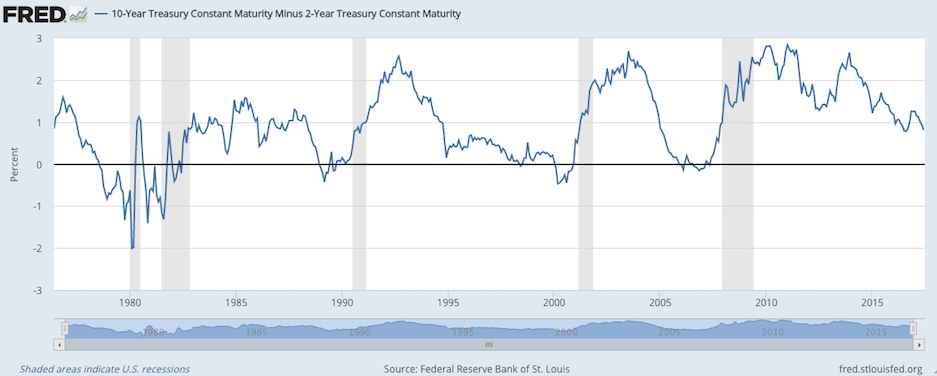
Today is actually a very negative day for banks, as it pertains to their bottom line — but the stocks don’t care. The US yield spread (2s,10s) have tightened again by more than 2bps to 78bps, yet bank stocks are acting like the exact opposite is occurring. This is the definition of a Costanza trade — doing the opposite for the sake of doing the opposite.

Why is this important?

Because when that yield curve inverts, it’s a virtual guarantee that the economy will soon sink into recession.

Everything feels and looks good now. But with US spreads tightening on a daily basis, US auto sales flagging, and both the retail and oil and gas sectors mired in depression, risk averse folks should pay attention and start thinking about ways to hedge or lock in gains.

Comments »

U.S. Auto Sales Are About to Dump Out

One of the major economic indicators that have proven to be worthy of investor attention is auto sales. Generally speaking, we all have one and we tend to buy new one’s when we feel good about the economy. During the 2008 financial crisis, home sales plunged by double digits — sending GM and F to the government with a tin cup — begging for bailouts.

While this downturn doesn’t seem to be that bad, it’s still negative growth at a time when the Fed is in the midst of a fucking insane hiking program.

According to JD Power and LMC Automotive, US sales fell by 2% in June, in spite of large discounts.

June U.S. new vehicle sales will be about 1.48 million units, a drop of 2 percent from 1.51 million units a year earlier, the consultancies said.

The forecast was based on the first 15 selling days of the month. Automakers will release June U.S. sales results on July 3.

The seasonally adjusted annualized rate for the month will be 16.5 million vehicles, down nearly 2 percent from 16.8 million units in the same month in 2016.

Retail sales to consumers, which do not include multiple fleet sales to rental agencies, businesses and government, were set to decline more than 1.3 percent in June.

U.S. sales of new cars and trucks hit a record high of 17.55 million units in 2016. But the market has begun to saturate thanks partly to a glut of nearly-new used vehicles, forcing automakers to hike incentives to entice consumers to buy.

This is the third consecutive month of declines for the autos. Investors should be paying attention to this.

“As the U.S. auto market enters the fourth month in a row of a sub-17 million unit selling rate, nerves are being tested,” Jeff Schuster, senior vice president of forecasting at LMC Automotive, said in a release. “It will be challenging in the second half of the year to keep pace with 2016 … but a year still expected above 17 million units should not be considered a poor performance.”

The consultancies said consumer discounts averaged $3,661 per vehicle, a record for the month.

Discounts as a percentage of the manufacturer’s recommended sale price remained at 10 percent in June, a level industry experts say is unsustainable.

Inventory levels at major automakers have also raised concerns.

The average number of days a new vehicle sits on a dealer’s lot before sale remained at 70 through the first 15 days of June.

Year to date, TSLA is +79%, while F, GM, HMC and TM are flat to down 9%.

Comments »