iBankCoin
Home / Dr. Fly (page 459)

Dr. Fly

18 years in Wall Street, left after finding out it was all horseshit. Founder/ Master and Commander: iBankCoin, finance news and commentary from the future.

Happy May Day

This month I’ll be turning 43 years old. Hopefully by then, I would’ve sold this house and moved down into the south to become a southern gent. However, the process to get the house ready to sell it is going slower than I anticipated. There is nothing more dreadful, nothing more rueful, than having to move an entire house filled with 5 grown people.

Do I find myself elated all the time?

No, almost impossible to do.

Miserable?

Wouldn’t go that far.

I plod on, press and pull, scratch and claw — until there is nothing left.

Being May the first, I am often reminded of the delightful and hilarious short story May Day — written by F. Scott Fitzgerald.

Do yourselves a favor and read it here. Thank me later.

Small pet peeve of mine. Working from home has to be the most disastrous thing another human being can do to himself. All day long I am shadowed by my fucking dogs — asking to go out or eat something — or simply wanting me to throw a toy at them. I thought I loved dogs, until I was left alone with them for an extended period of time. Now I find myself tolerating them and often find myself locking the doors behind me.

Futures are sharply higher. Today I allocate the Quant in Exodus, so I will be busy for an hour or two after the market opens.

Comments »

Cramer Has Meltdown Over Musk Tweet

Inside voice Jim — INSIDE VOICE.

A little background on Musk vs Cramer — they never got along.

Musk disses Cramer on Tesla’s IPO day.

Cramer says Musk is making a fool of himself.

Recently Cramer upped the rhetoric on Musk.

To that, Musk responded that Cramer wasn’t real and is a simulation.

The fools at The Street dot dumb account cornily tweeted this shit out — to which was flippantly dismissed by a now deleted tweet by Musk — declaring Cramer to be “ShallowFake.”

That small spat caused this fucking meltdown, presided over by a poor girl who looked like she was just born yesterday.


Steel yourself Jim. Toughen up.

Comments »

Apple Moves Past iPhone Cuckery — Blows Away Numbers

I’ve been waiting for these numbers for 3 months, obsessing over them. Faggots online have been focused on the wrong stats — iPhone sales. Not indicative of global growth anymore. People already have cool phones. Now they want services. This is no different from the fiber rollout of the late 90s, or the rail layouts of the 1880s.

The infrastructure for mobile devices has already been laid out; now Apple is rushing towards services.

Broad strokes:

Company expects paid subscriptions to surpass 500 mln in 2020 (currently 390 mln).
Mac revenue decline was driven by processor constraints.
iPad revenue returned to growth in China.
Continues to expect annual increases in dividends.
Tim Cook feels results are positive in light of currency movements. Results would have been 200 basis points better in constant currency.
Best quarter ever for services.
iPad revenue growth rate was highest in 6 years.
Wearables business is now the size of a Fortune 200 company.
Yr/Yr performance in China improved relative to the December quarter.
Declines in iPhone revenue were “significantly smaller” in the final weeks of the quarter.
Active install base continues to grow in each geographic segments.
Reached 390 mln paid subscriptions, an increase of 30 mln qtr/qtr.

Apple prelim Q2 $2.46 vs $2.36 S&P Capital IQ Consensus Estimate; revs $58 bln vs $57.40 bln S&P Capital IQ Consensus Estimate; sees Q3 revenue $52.5-54.5 bln vs. $52.09 bln consensus

And here is the kicker:

Apple reports Q2 services gross margin of 63.8% vs 60% ests

Those margins are incredible, likely driven by the high margin aspect of services. Apple is now quickly moving into a higher margin business segment and nothing about these numbers speak slow-down.

The stock is higher by 5% in the after-hours and it cements the idea that things have gotten better and continue to get better, as evidenced by a pick up in iPhone sales towards the end of the quarter.

Remember I told you what their parts marker said back in February. Those comments by Amkor have been prescient. New record highs here we come.

Comments »

Stephen Moore, Male Earnings, And New Yankee Fans

Stephen Moore has been declared to be a ‘moron’ on this blog before. But this morning his comments might’ve warmed my black heart a little, not because of whether they were true or not — but because of the do not give a fuck nature of them.

He complained of “male earnings”, from a societal point of view. Naturally this is sound thinking. We should always be concerned with the major driving source of the global economy — male earnings. However, we live in a world where Arya killed the Night King and Cersei is Queen, Sansa rules Winterfell, The Mother of Dragons exists, and Brienne of Tarth beat The Hound in single combat — so of course this gender ‘insensitive’ comment triggered a lot of people.

“I want everybody’s wages to rise, of course. People are talking about women’s earnings. They’ve risen,” Moore tells CNBC.

“The problem actually has been the steady decline in male earnings, and I think we should pay attention to that, because I think that has very negative consequences for the economy and for society,” the man President Trump wants to nominate for the Fed board

Sometimes I feel like women believe they could be Wonder Woman and charge the trenches of WW1, or fly into outperspace without a space suit like Captain Marvel. In a way, it’s a fucked up psyop on women — because it feeds into their proclivity for escapism and fantasy.

Back to Mr. Moore and “male earnings”. Important? Yes. But it’s sort of like new Yankee fans bitching about not winning a World Series recently. After all, its been 10 years since their last win and there’s a whole young generation of Yankee fans who’ve never seen the Yanks in a ticker tape parade. We all feel so sorry for them (sad face).

We don’t — and that’s because we’re fucked up people who are deeply vindictive, jealous, and filled with violence.

Happy Tuesday, fucked faces.

Comments »

The Federal Reserve is Cooking Up New Schemes to Reduce Balance Sheet

Given the bull nature of the market, why on Earth would the Fed scheme up new ways to prop up banks now? Judging by the broad strokes of this plan, it looks like a scheme to get out of Treasuries for the Fed — a balance sheet reduction plot, transferring the bonds from them to banks.

Federal Reserve officials are considering a new program that would allow banks to exchange Treasurys for reserves, a move aimed at ensuring liquidity during difficult times that also would help the central bank decrease the size of its nearly $4 trillion balance sheet.

The so-called standing repo facility is in its early discussion phases. Respected St. Louis Fed economists David Andolfatto and Jane Ihrig have authored two papers on the plan, which they say would ease the regulatory burden for banks who feel pressured into holding ultra-safe assets.

In some quarters, the idea is viewed as a natural extension of current Fed policy. Others, though, think it in essence could be a repackaged form of quantitative easing and thus yet another iteration of the Fed’s decade-long tinkering in financial markets.

The idea comes as central bank policymakers look for ways to cut the bond holdings on its balance sheet without being disruptive to markets.

“With this facility in place, banks should feel comfortable holding Treasuries to help accommodate stress scenarios instead of reserves,” Andolfatto and Ihrig wrote in March. “The demand for reserves would decline substantially as a result. Ample reserves — and therefore the size of the Fed’s balance sheet — could in fact be much closer to their historical levels.”

In a follow-up a few weeks ago, the duo wrote that the first paper “generated a considerable amount of discussion among industry experts. Many people seemed broadly sympathetic to the proposal, while others expressed skepticism.”

A question of balance

Determining an appropriate size for the bond portfolio has been an ongoing headache at the Fed.

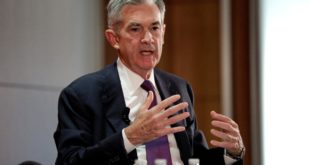
Fed Chairman Jerome Powell’s comments in December that a program to cut the balance sheet was on “autopilot” contributed to a market meltdown that lasted through the fourth quarter. Since October 2017, the Fed has been allowing a set level of proceeds from Treasurys and mortgage-backed securities holdings to roll off each month, resulting in a reduction of just shy of $500 billion.

A subsequent Fed policy pivot that included an intention to end the balance sheet roll-off in September assuaged the market. However, the question of where the level of bonds, and reserves, ends up over the long run remains.

Instituting a standing repo facility would encourage banks to hold more Treasurys and thus reduce the demand for reserves, which escalated following the financial crisis when big Wall Street institutions faced a crippling liquidity shortage. Congress responded to the crisis with reforms that mandated higher holdings of safe assets. While Treasurys are considered safe, they aren’t as liquid during times of stress.

The Fed ideally would like to see a lower reserve level, with the New York Fed putting the desired number from banks around $784 billion. The level of bank reserves at the Fed peaked at nearly $2.8 trillion in mid-2014 and is currently $1.55 trillion, or some $1.41 trillion above the required amount. Reserves and the bond assets are on opposite sides of the balance sheet and thus tend to move in sync.

Backers see the repo facility as a relatively risk-free way of giving banks a release valve in times of financial tightness while providing at least a stealthy form of QE.

“It makes it a much easier transition. The banks would not feel obligated to hold these reserves if the could get the reserves quickly by selling Treasurys to the Fed,” said David Beckworth, a research fellow at the Mercatus Center and former economist at the Treasury Department. “This would be a much more market-driven QE. The banks could quickly get reserves. You could see a big balance sheet again, but that would be driven by the banks.”

Under three previous QE stages — another called “Operation Twist” was balance-sheet neutral — the Fed credited itself with funds that it then used to acquire Treasurys and mortgage-backed securities. The total of the operations was about $3.8 trillion and is widely felt to have stemmed liquidity issues, held interest rates low and juiced up the prices of risky assets like stocks and corporate bonds.

Over the past year and a half or so, the Fed has sought to shed some of those assets and restore some normalcy to monetary policy.

Former Fed Chair Janet Yellen had characterized the balance sheet roll-off as akin to “watching paint dry” as it would run “in the background.” Reality, though, hasn’t been so smooth, and the Fed has sought ways to allay market fears that the new policy regime would be disruptive.

In summary, under this plan, banks would not need to hold cash reserves, but they could instead hold Treasuries. By doing this, the Fed could dump their bonds on them and the banks get to hold something of patriotic value. It seems to me like a good plan to get liquid on banks, while at the same time providing banks with a higher return in the form of government bonds. This of course could lead to disaster, should America’s sovereign debt ever come into question. The banks would be tethering themselves to the Federal Government and I guess, at the end of the day, what difference does it make now?

Long TMV.

Comments »

A Brand New Fly Streak Emerges From the Rubble

Last week I got lit on a variety of oil stocks. I sold them out and licked my wounds, swore an oath that I’d exact revenge and made arrangements for such eventualities. As you sit there, star-struck reading this, I am happy to report to you 9 (count ’em NINE) winning trades in a row. Some of these trades were taken on Friday. I cannot be stopped. Failure to adhere to my warnings will lead to your ultimate demise.

JMIA +8.8%
PD +16.4%
HUBS +8.9%
GSKY +7.7%
PINS +8.6%
GDDY +3.5%
LASR +6.5%
DAVA +8.8%
TUFN +8.4%

From here on, I do not intend to ever lose money in a stock again. I’ve released all of the banned readers — did that last year because I wanted to be provoked. I beg of you — bet against me. You have client assets and “The Fly doesn’t know what the fuck he’s doing” — so go ahead. See where it gets you.

Comments »

Endless Upside For Disney, China Trade War News Imminent, Moron Upgrades Target

Good morning lads. I say lads because based on the demographic data provided to me, I have like 3 female readers — the rest of you are degenerate males aimlessly spiraling higher in an effort to re-instate the patriarchy. But it’s too late, fucked faces — Captain Marvel is here.

Funny thing about teevee these days, and please don’t take offense, but it’s normalizing attributes in women that actually do not exist. It’s not like most men can go out there and stab a bunch of zombies in the face either, or that zombies even exist — outside the occasional Miami varietal. One thing I know for certain — it there was a Miami zombie on the loose — it wouldn’t be women fighting it. I can just hear my wife getting angry at me now, but that’s because she too is programmed to believe the absolute shit being driveled on teevee and in movies.

Look at Captain Marvel. Ergo, women are powerful. Women are extraordinary and brave, and honestly the better of the two genders — but they’re not fighting Miami Zombies.

Got some news here early going.

JP Morgan increased their price target on DIS thanks to Avengers. Seriously, there is no upside to be had on DIS. The company is clicking on all cylinders, save ESPN.

J.P. Morgan increased its price target on Disney to $150 a share from $137.

“The underlying business continues to perform very well with several notable catalysts ahead that we believe may continue to drive outperformance,” J.P. Morgan analyst Alexia Quadrani said in a note to investors.

Quadrani said J.P. Morgan was also raising its estimates for Disney’s third quarter earnings to $1.80 a share from $1.73 a shares, specifically citing “Avengers: Endgame.”

Next up Trump’s trade war. Why hasn’t this trade war adversely affected China or the US? How is this possible? We were told doom would beckon quickly and that we wouldn’t be able tp escape the pangs — yet here we are at +3.2% GDP.

News coming soon, apparently.

“We’re getting into the final laps,” U.S. Treasury Secretary Steven Mnuchin was quoted by the New York Times as saying, during an interview at the Milken Institute Global Conference.

According to the report, Mnuchin said that while both countries are nearing a deal, negotiations are reaching a stage where either an agreement could happen — or it could end without a deal.

Both Mnuchin and U.S Trade Representative Robert Lighthizer will be in Beijing for talks that start on April 30.

Lastly, some morons at Barclay’s, who fashions himself “the biggest bear” on Target — is now upgrading shares and suggesting the stock could rise by 50%. How can someone be this wrong and now advertise it like it’s cool — because he was such a bear? Target is Target, bland, standard big box retailer — catering to the whims of locals with average goods for cheap prices. No one with money shops there, lest they need some detergent or bar soap — or cat litter.

Barclays’ Matthew McClintock upgraded Target to overweight from equal weight and raised his 12-month price projection to $115 a share from $85. The new target represents a 49% surge from Friday’s close of $77.12.

In a portion of the report entitled “Why the biggest bear on TGT finally upgraded the stock,” the analyst goes on to say that the recent decline in Target shares after Amazon’s said it was moving toward one-day shipping for Prime customers has gone too far. Target shares are down more than 5% in the last week.

“We have now decided with the pullback in the stock due to recent Amazon fears, our expected downside from this near-term view is meaningfully derisked,” he wrote. Target “is already ahead of AMZN in same day delivery … and has built a supply chain that fulfills e-commerce primarily from stores (where next-day delivery is much easier), which stands in contrast to most retailers.”

Futures are slightly lower.

Comments »