iBankCoin

I Found the Money! $HD Beats, Guides Higher

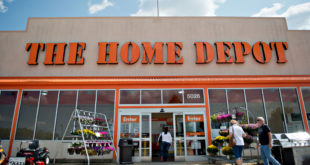
We’ve become a nation of lumberjacks and home flippers, apparently. HD and LOW have been two of the few retail outlets that have managed to perform, consistently without pause.

The one common denominator: you can’t order lumber, at least not efficiently on Amazon. Moreover, contractors rather drop dead than order a hammer online.

Home improvement stores are the last frontier in retail left unscathed by the Amazon scourge. I’m sure J. Bezos, as we speak, is trying to find a way to hurt the brick and mortar retailer.

06:09 | HD | (135.34)
Home Depot beats by $0.09, beats on revs; raises FY17 guidance; Q1 comps +6.5%

Reports Q1 (Apr) earnings of $1.44 per share, $0.09 better than the Capital IQ Consensus of $1.35; revenues rose 9.0% year/year to $22.76 bln vs the $22.39 bln Capital IQ Consensus.
Comparable store sales for Q1 were +6.5% vs. ests near +5.2%, and comp sales for U.S. stores were +7.4%.

Co issues raised guidance for FY17, sees EPS of $6.27 from $6.12-6.18 vs. $6.22 Capital IQ Consensus Estimate; raises FY17 revs of +6.3% to ~$94.095 bln from $93.03-93.83 bln vs. $93.84 bln Capital IQ Consensus Estimate; Co upside guidance for FY17 comps of ~+4.9% vs prior guidance of ~+4.5%.

Shares are mildly higher in the pre-market.

Comments »

Ooh, Scary: Crazy Old Bastard Soros is Buying More $SPY Puts Again

Very scary news of George Soros doubling his Spy puts exposure has some people running for the hills, afraid of the apocalypse to come. After all, George controls the world and knows all.

Any cursory Google search will shed some light on the annual Soros out buying bonanza, something I believe he does as a sacrifice to his master, Lucifer.

image

Look at the dates of those articles. Now read this from Reuters.

Billionaire investor George Soros, who has been warning that the 2008 financial crisis could be repeated due to China’s economic slowdown, on Monday disclosed his doubled wager against the S&P 500 in the first quarter.

Soros Fund Management said it owned a 2.1-million-share “put” option in the SPDR S&P 500 exchange-traded fund (ETF) which tracks the benchmark U.S. stock index. That was up from about 1 million shares in the option in the fourth quarter, it said in a filing with the U.S. Securities and Exchange Commission.

Now that I’ve added some color on the annual Soros put buying bonfire, isn’t the ominous sounding Reuters article somewhat meaningless?

Comments »

Chinese are Long U.S. Real Estate to the Tune of $300 Billion


Anyone in high end real estate will tell you tales of all cash offers for multi million dollar properties from outrageously wealthy Chinese buyers.  That exposure has now topped $300 billion.

The reason is two fold. There is a fast growing upper class, an oligarchy, in China. And, the second reason, they want to get their fucking money out of China.

The best place to park cash is in treasuries, euro bonds, or real estate in big western cities that have liquidity.

Hence, the $300 billion exposure.

Between 2010 and 2015 Chinese buyers bought $93 billion in residential real estate, nearly $208 billion of mortgage-backed securities, and roughly $17 billion of commercial real estate, including office towers and hotels, according to the report by the Rosen Consulting Group and the Asia Society.
The average home price for Chinese buyers in 2015 was $831,800, compared with $499,600 for all other international buyers. In terms of the total dollar amount spent on U.S. homes, China surpassed every other country from 2013 to 2015, the report found.
In 2015, Chinese investors for the first time bought more homes than buyers from Canada, formerly the leading purchasers of U.S. homes, according to the report.
One reason Chinese buyers spend more, the report found, is their tendency to buy in expensive property markets. In 2015, 35 percent of Chinese house purchases were in California, followed by 8 percent in Washington, and 7 percent in New York.

Anyone remember the anti Japanese rhetoric that was being broadcasted in the 90s, with lunatics saying “they might’ve lost the battle (WW2), but they’re winning the war” (by buying up American re)?

That didn’t work out too well for them and something tells me neither will all of this Chinese buying.

Comments »

I’ve Never Been So Uninterested in 13-Fs as I Am Now

There was a day in age when hedge funds were respected for their stock picking talent. They found ways to access information that they layman could not even dream of accessing. It was a world filled with serious people out to make some serious money. All of that has changed, especially with the Fintech revolution that has evened the playing field for the average Joe, sputtering around in his Toyota Camry, trying to grow his nest egg.

I am dead serious about this.

The tools and sites and people sharing ideas online have truly empowered people to the point that paying attention to the once cherished 13-f filings, by some of our most prestigious hedge funds, is pretty much a non-event. Some of the new positions of mega-titans, like Buffett or Tepper, will always draw interest and perhaps lift the shares for a day or two. But, for the most part, people don’t give a shit what Tiger Global or Viking are buying and selling anymore.

Agree or disagree?

The industry is so maligned by years of underperformance and chicanery that betting against them is often a better strategy than betting with them. Additionally, so many of them have become so big in size, they’re all stuck buying the same stocks. There’s so much money sloshing around in search of performance that the very performance desired can only be found in outlier years, black swan events, or much smaller funds.

This is why Buffett thinks hedge funds are idiotic, especially when compared to buying an index fund like SPY and reinvesting the dividends. The fact that the SPY beats upwards of 70% of hedge funds is absurd and comedic. The only thing the industry is good for, apparently, is convincing people to send them money.

Comments »

The House of Saud’s Treasury Holdings Released For the First Time and It’s Completely Underwhelming

The U.S. treasury has released Saudi Arabia’s treasury holdings for the first time, coming in at just $116 billion, down from $123 billion achieved in January. Normally, I’d read this data point, sneer at it, then go about my day. However, given Saudi Barbaria’s (remind me to never travel there) $587 billion current account surplus, one has to imagine where in the world all of that money is being domiciled?

To house all of that money, you can’t just leave it in a checking account, or even a bank for that matter. Money of this size is normally held in treasuries, due to the implicit safety of the U.S. treasury and liquidity.

In comparison, both China and Japan own upwards of $1 trillion a piece in treasuries. For the love of Christ, Belgium owns $143 billion in treasuries and they make a living selling chocolate bars around the world.

So why, all of a sudden, are the finances of Saudi Barbaria being laid bare? That’s the bigger question. Moreover, why is this important, occurring at the same time they try to whore off Saudi Aramco, their state own oil crown jewel, in a $2 trillion IPO?

Perhaps by removing the secretive veil that’s been in place since 1973, this is a warning shot of sorts for them to fall in line with something America deems important? Who knows? I find it interesting that we first became besties with Iran after oil collapsed by 60%, followed up by surprise transparency in The House of Saud’s finances.

One thing is for certain, they aren’t important holders of U.S. debt.

One last thing, maybe it has something to do with a NYT report from several month’s ago, claiming that Saudi Arabia would dump $750 billion in U.S. assets if a certain bill was passed?

Comments »

U.S. Yield Curve Tightest Since 2007

What a Debbie Downer narrative this is on a +140 day. I’m like a macabre mortuary worker throwing ashes of the dead on people celebrating life, who are smiling in the sun and drinking champagne.

Nevertheless, the yield curve is flattening. I’m not just making this stuff up, you know.

image

For those of you new to this game, the tightening of the yield curve, the spread between the 2s and 10s, is a harbinger of doom. When it inverts, it typically means recession is on the horizon. Since the accuracy of this warning signal is almost flawless, it’s important to keep track of it when the damned thing is on the move.

It’s moving Gordo. It’s moving!

This is the tightest spread since 2007, one year before the world was almost destroyed by Lehman Brothers and the assholes at AIG.

Comments »

Nigerian Rebels Help Lift Stocks

That’s a headline you won’t read anywhere else.

Nigerian rebels are wreaking havoc again, running about the countryside, generally messing with oil production. As such, Goldman is out with a boolish note on crude, due to sudden supply constraints. With crude jumping, stocks, slavishly, are following suit.

image

image

It’s very amusing to see everything so interconnected.

Biotech is a notable standout, thanks to the ANAC deal. Financials and retail are lackluster.

As long as crude remains strong, it’s hard to see how the market can sell off today, especially after last week’s sell off.

Thank God for those Nigerian rebels, coked up, turning their oil fields into a shooting gallery.

Comments »

Goldman: Buy Oil, Sell Stocks; We’ll Be Right No Matter What

David Kostin from Goldman Ballsachs is warning clients to get the fuck out of stocks this morning, pouring cold milk over everyone’s heads.

He thinks the market is complacent and without decorum. Moreover, he likes downside puts protection here, as the options market is living in a fantasy world of bullish fervor.

“A drawdown during the next few months could find the S&P 500 index falling by 5-10 percent to a level between 1,850 and 1,950,” they write in their latest research.

High valuations
Price to earnings ratios—a popular measure for whether a stock is expensive relative to history and to its peers—remain stubbornly high. To illustrate this “extended valuation,” Kostin and his team point out that the forward P/E multiple of the S&P 500 is now in the 86th percentile, when looking back over the past 40 years. The median stock in the index trades in the 99th percentile of historical valuations, the bank adds.

Supply and demand
Investors weren’t very quick to buy U.S. stocks during the first few volatile months of 2016. “Even as the S&P 500 index rebounded from its Feb. 11 low, institutional and hedge fund U.S. equity futures positions remained net short,” Goldman writes. That has changed quite drastically. “Sentiment has shifted sharply during the past few weeks. Since the end of March, investors have bought $23 billion worth of futures positions, lifting our Sentiment Indicator to 32, a less bullish level compared with mid-winter.”

No one knows what the Fed will do
There isn’t much consensus as to when the Federal Reserve will raise benchmark U.S. interest rates again. While Goldman economists expect two hikes this year, the wider market is pricing in even chances of one or fewer rate increases. The mismatch means “more likelihood exists for an incremental hawkish surprise than a dovish surprise,” the equity analysts write.

It’s an election year
An unconventional political season means that Goldman’s clients are paying even more attention to electoral campaigns. “The U.S. presidential election is now part of every client conversation,” Kostin and team note. Even without the added surprises, the S&P doesn’t usually do well during the summer of election years. “History shows that during a typical presidential election year, the S&P 500 index remains relatively range-bound until November,” Goldman says.

In a separate note, another Goldman analyst said oil has bottomed, thanks to the wonderful strife in Nigeria, the Canadian fires, and a sundry of events which has led oil production supply to fall to levels that make a rally in crude plausible. Naturally, these are transient events and utter horseshit, especially when taking into account what these large and small oil companies are reporting in their earnings: record production levels are still being achieved.

Nevertheless, it’s important that Goldman curry favor to both the bull and bear crowd, in order to look right no matter the outcome.

Comments »

$RRC to Acquire $MRD for $15.75

This is a unicorn. A merger in the energy sector, something that might very well light a fire under midsized companies, especially with oil spiking this morning.

Range Resources is buying Memorial Resource Devlopment for $15.75.

The combination — one of few U.S. energy mergers during the market rout — will give Fort Worth-based Range access to gas and oil properties in north Louisiana, adding to its operations in Oklahoma, Pennsylvania and Texas. Both companies have seen their shares drop during the commodities slump, which dragged down U.S. gas prices to a 17-year low in March amid a supply glut.

The transaction is “accretive to our cash flow, bolsters our credit profile and enhances the overall portfolio,” Jeff Ventura, Range’s chief executive officer, said in a statement.

Considering the debt load of some of these companies, getting bigger is better from a credit point of view.

RRC is down 2% on the news.

Comments »

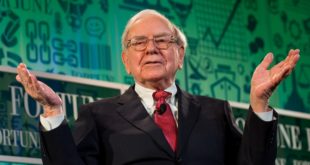
Buffett Goes Dumpster Diving, Acquires Stake in Tim Cook’s $AAPL

Berkshire Hathaway reported a 9.8 million share position in Tim Cook’s gay Apple today, which is odd, since Apple is wholly a piece of shit.

However, judging by Warren’s recent moves, perhaps senility is finally taking grip of the great one’s gigantic brain. Buying Apple is almost like taking money and simply throwing it away.

Nevertheless, shares of Apple are slightly higher this morning, off this news.

image

Comments »