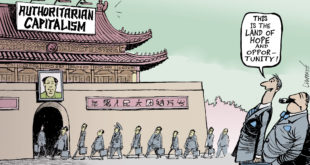
If this doesn’t tell you everything you need to know about the legitimacy of Chinese listed companies in the United States, nothing will.
Chinese regulators are contemplating a move to bar Chinese ‘going private’ transactions and relisting their scams at home at what they view as excessive valuations.
They know the true nature of these scam artists, unlike our investment banks who willingly turn a blind eye.
Shares of many Chinese deal stocks unraveled last week, shedding billions in market cap. Over 40 companies have received buyout offers, valued at over $35 billion, with 75% of these deals open and pending. The biggest deal pending is QIHU at $9.3 billion.
The unraveling started on May 6 when the China Securities Regulatory Commission said that it’s studying the impact of companies seeking to relist domestically after withdrawing from overseas. The regulators are concerned the valuations estimated for some domestic backdoor listings are too high and could affect the stability of the stock market, according to the people familiar with matter. Policy makers also want to avoid encouraging more buyouts that could prompt capital outflows, the people said, asking not to be identified as the information is private.
Below is a table comparing the U.S.-listed Chinese companies with the largest differences between their share prices and buyout offers. The widening of the offer premium indicates increasing concern that the deals will complete.
Company Name Closing Price ($) Offer Price ($) Premium (%) Premium A Week Ago
China Information 1.20 4.43 269.17 216.43
21Vianet 13.66 23 68.37 23.26
Renren 2.5 4.2 68.00 37.70
Momo 11.68 18.9 61.82 29.63
KongZhong 5.50 8.56 55.64 24.24
YY 44.85 68.5 52.73 20.98
Trina Solar 7.94 11.6 46.10 31.52
Dangdang 5.49 7.812 42.30 19.27
iKang 17.98 25 39.04 17.65
AirMedia 4.32 6 38.89 25.19
Jumei 5.29 7 32.33 15.51
Autohome 24.80 31.5 27.02 11.78
Note: share prices are as of May 13.
It’s worth noting that Chinese regulators are actively trying to crack down on corruption, from their scam IPOs to food safety to casinos. However, as an American investor in these mystery wares, you should be alerted to these facts before diving in headlong. For the most part, China is still the Wild West, corrupted by an institutional and innate culture of thievery and corruption.
Buyers beware.
Comments »