iBankCoin

DOLLAR CRUSHED, CRUDE STABLE, CHINA SHUT DOWN: LET’S PARTY

What a stupid period of time we live in, when
each nation relishes in their national currency weakening. In the olden days, national currencies would fall victim to inflation and an entire nation of savers would be ruined.

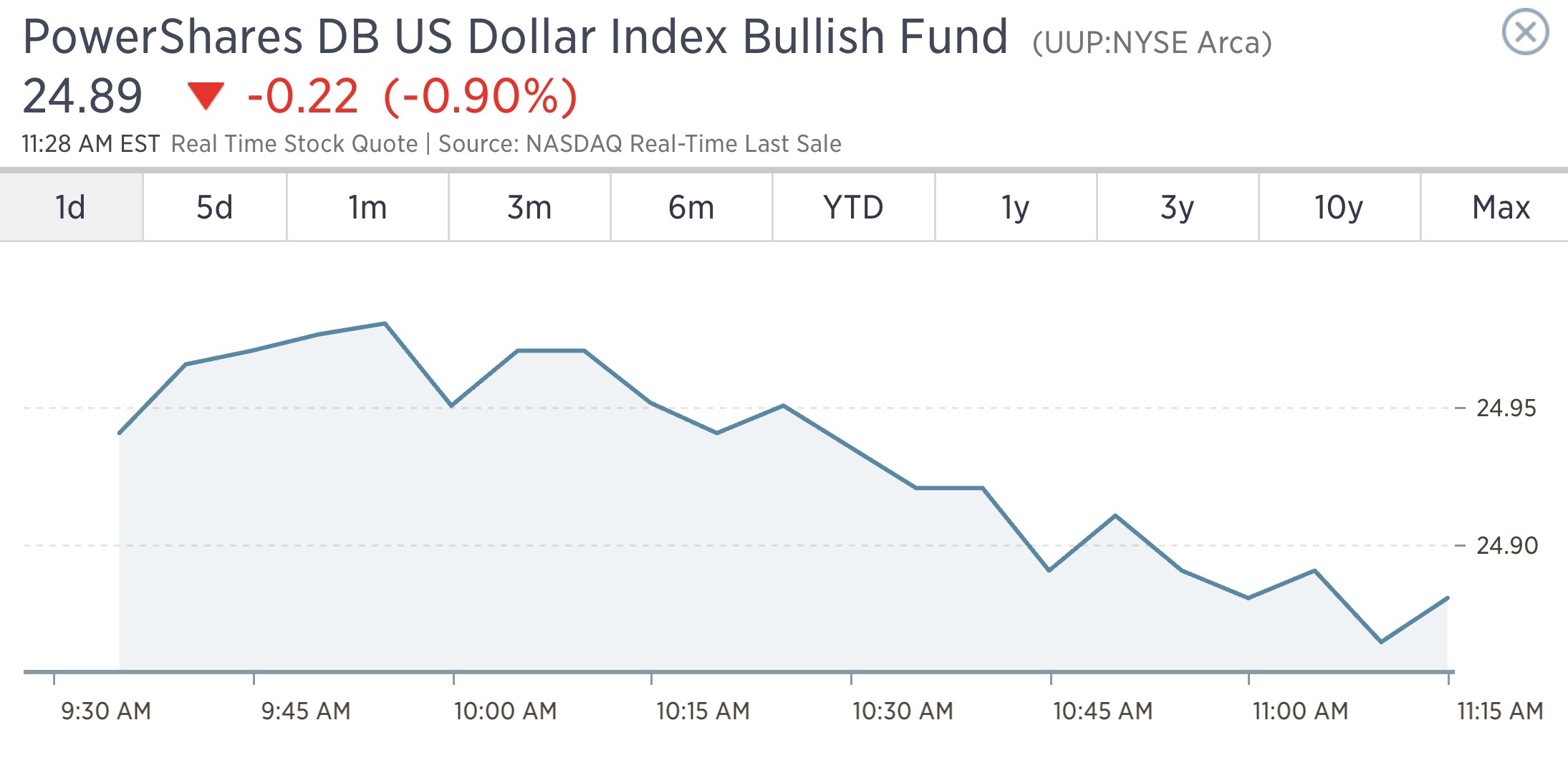
Here we are now, happy to see dollars crushed.

image

TLT should be lower. But people still want a seat on the ark. These are dark, dark days.

I’m constructive.

China is shut down due to monkey celebrations (rolls eyes). Oil looks stable and the Fed enters center stage tomorrow.

Potentionally, these ingredients, if mixed right, will lead to the biggest rally in over 12 months, if not MOAR.

Shorts should be removed; long exposure added, in my opinion.

Comments »

Stocks Reverse the Reversal; Misery Ensues

Can sentiment get worse?

Funny thing about the media: they seem to be harping on negative talking points. I posted a video interview of a Goldman Sachs oil analyst this morning who clearly was constructive on the oil debt and how it didn’t pose a systemic risk, in his opinion of course, and all of the headlines since then are “Goldman Analyst Sees crude below $20.”

That’s not the headline; but it’s the one you’ll click and read most.

Yesterday’s traffic at IBankcoin was the highest in a very long time. Our traffic during the month of January was up more than 50% from December.

In my experience with the site, since 2007, whenever markets are bottoming out, web traffic is at its highest. Aside from Exodus, it is the single best indicator of a market bottom that I know.

That being said, stocks gave up a sweet upside reversal. I suppose investors are waiting for Grandmother Yellen before committing to the long side–which has been nothing but pain.

Nevertheless, I’ll be buying dips based upon Exodus oversold signals.

Comments »

Stocks Erase Egregious Losses; Turn Around Tuesday is Here

The blood was to be purchased this morning, not sold. If you weren’t such misers with your business and possessed a membership hall pass for Exodus, you’d know that now.

image

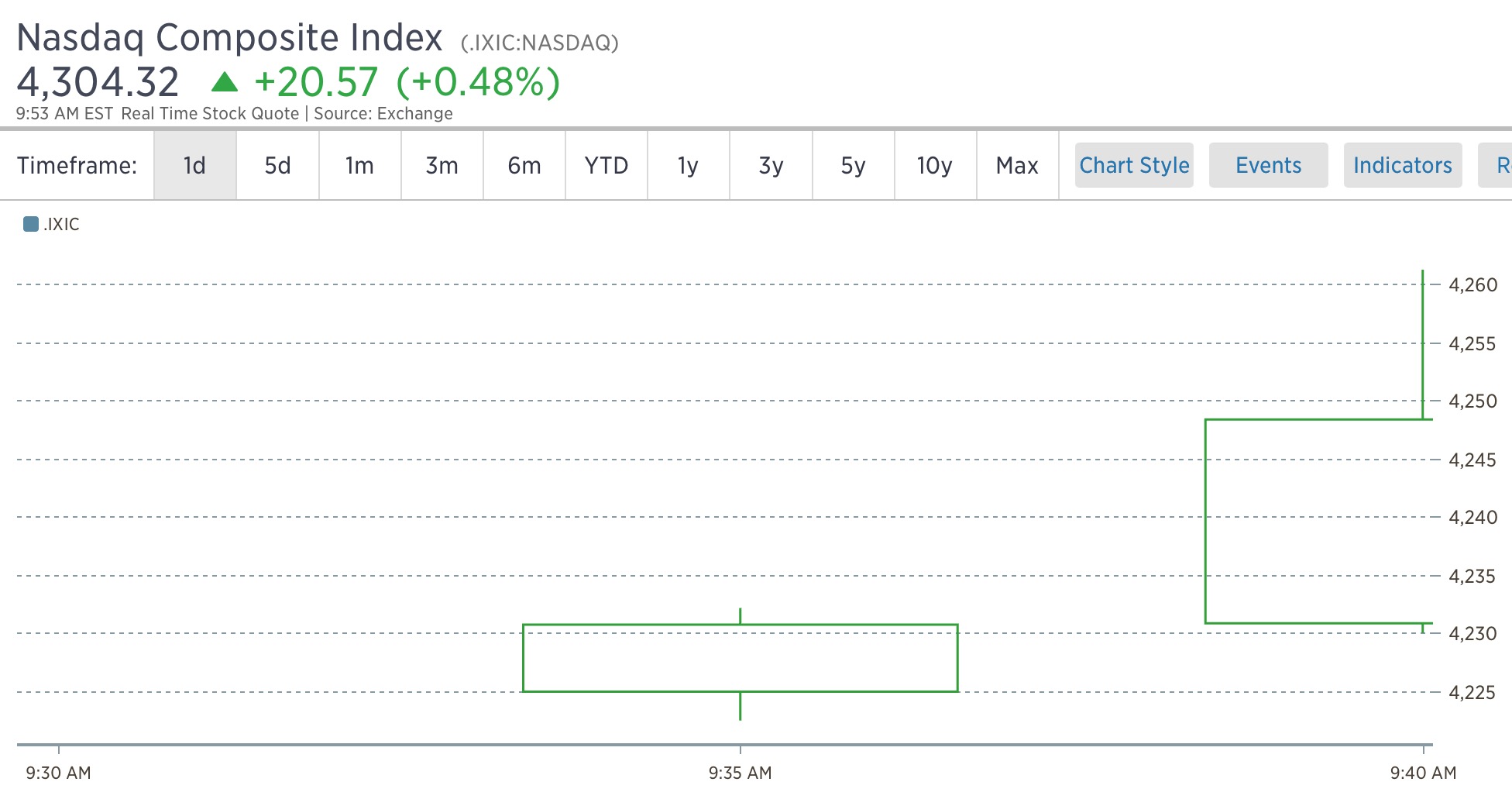
The set up is straight forward. I am looking for a huge reversal in sentiment today, which might be spoiled by Yellen’s speech tomorrow. Or, if she’s clever, today’s gains will triple tomorrow, after a dovish outlook on rates is communicated to the markets.

Either way, Le Fly is a net buyer of SPY, having done so sub $184 at the open.

Comments »

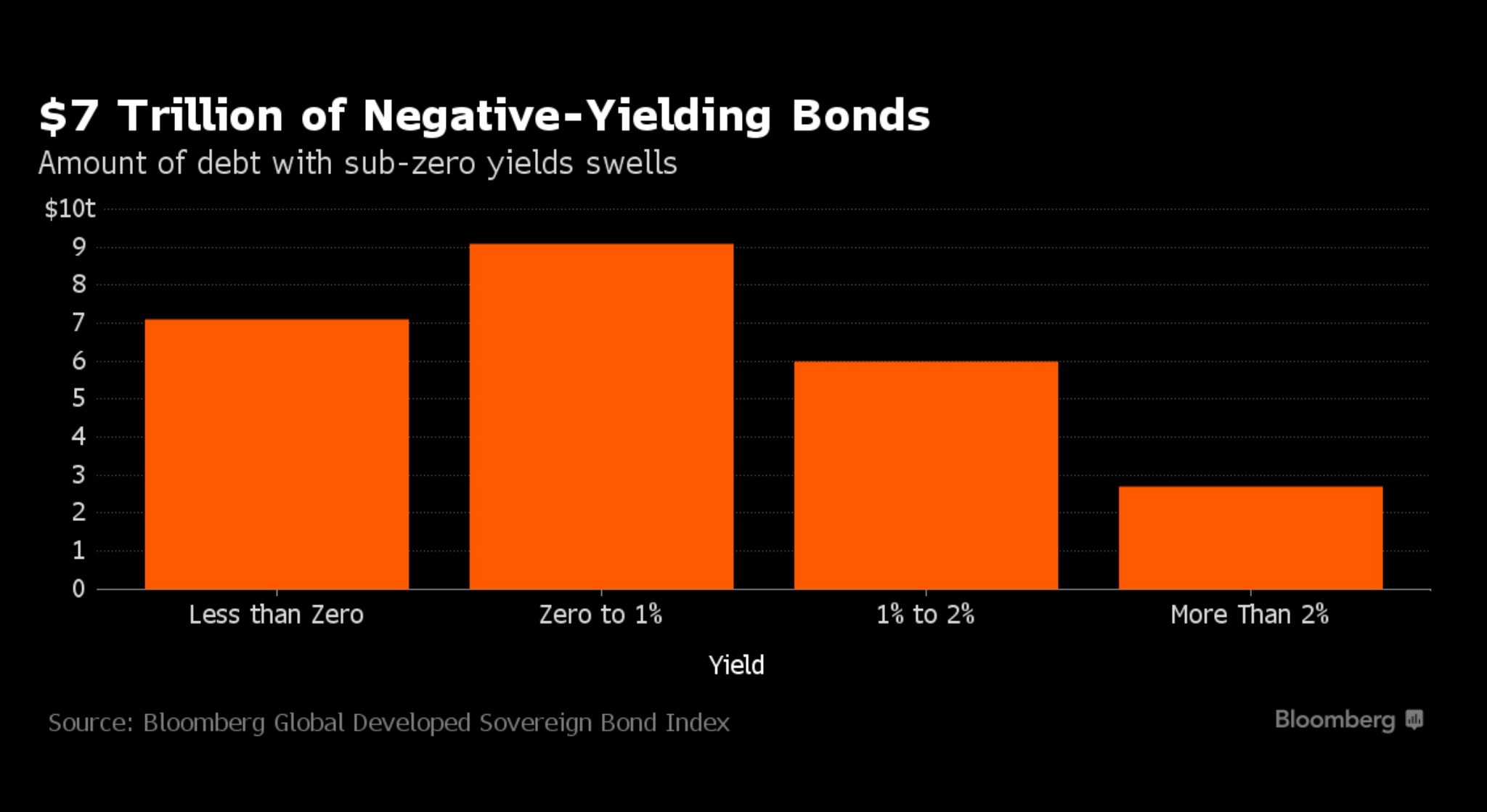
Twenty Nine Percent of Sovereign Debt Now With Negative Yields

This is a staggering number and I have no idea what the long term ramifications are. Twenty nine percent of sovereign debt now has negative yields. That’s about $7 trillion in debt, gents.

image

Last night Japanese bonds rallied furiously, as their equities cratered by more than 900 points. Astonishingly, up to 10 year durations now have yields less than zero in Japan.

Comments »

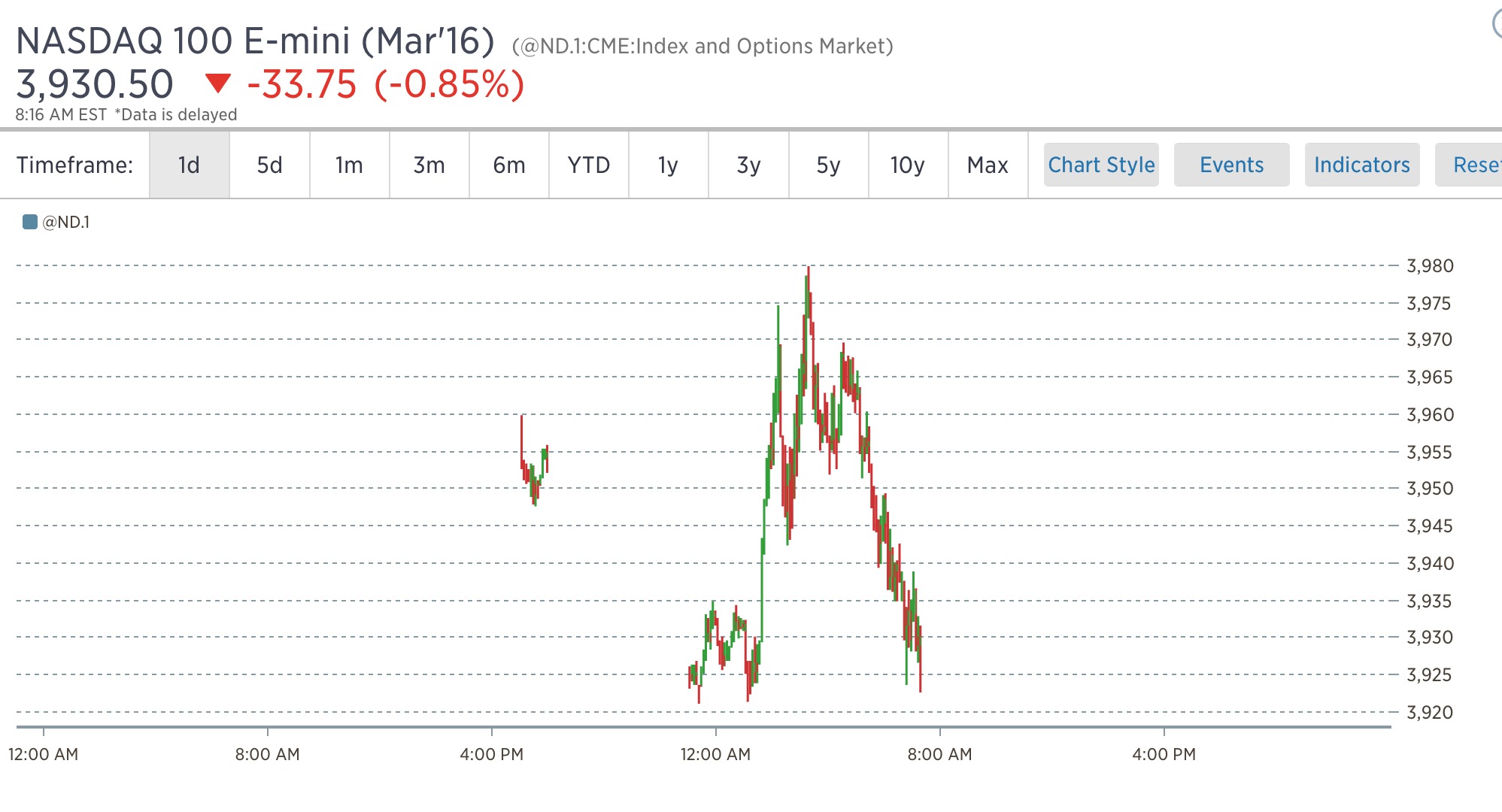
Europe, U.S. Futures Deteriorate: Time to Buy

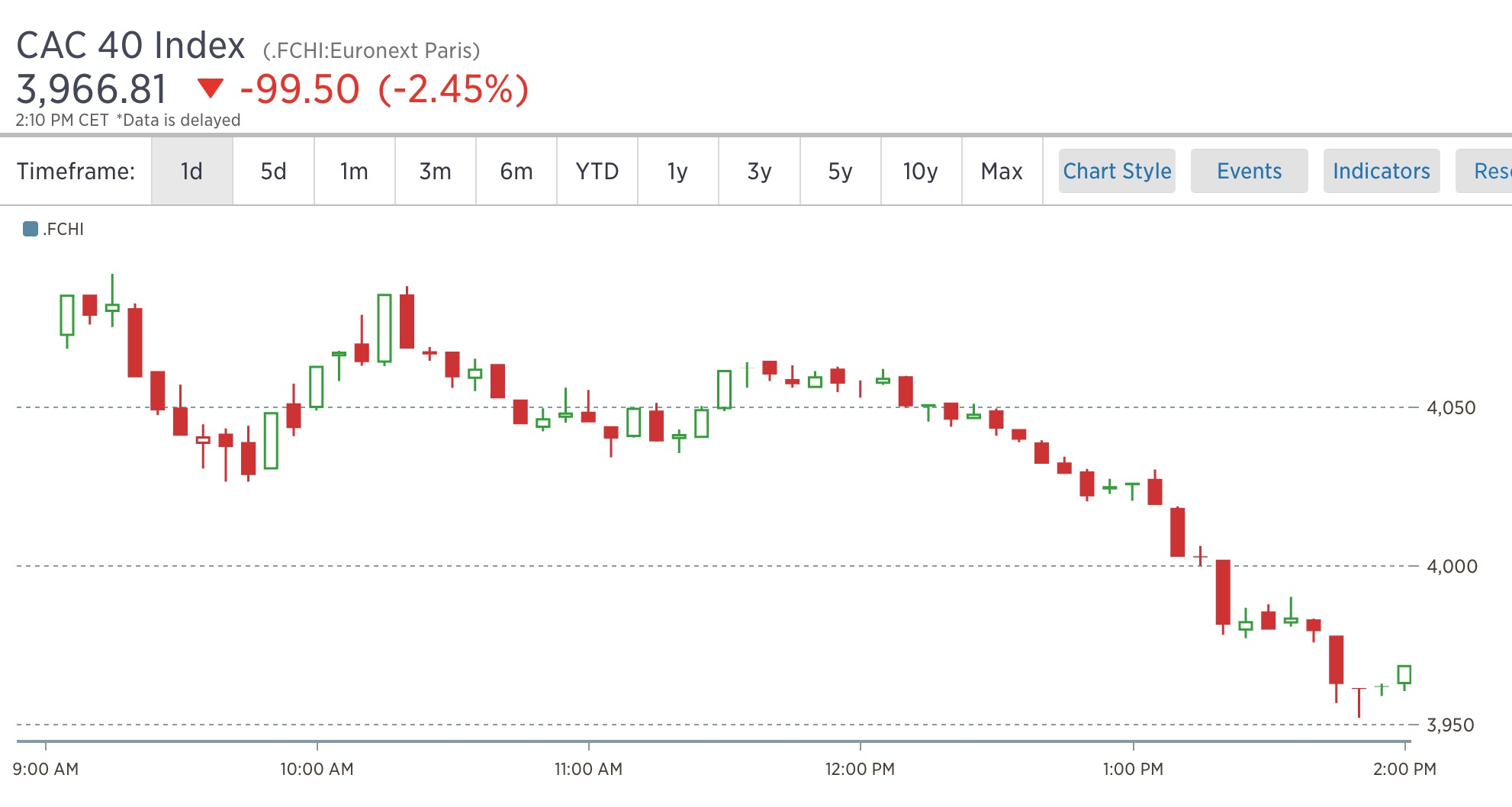
The French markets are leading Europe lower today and U.S futures are taking on the feeling of despair, as investors throw in the towel, very afraid of what Grandma Yellen might say tomorrow.

image image

Oil is slightly higher and copper is down by 2%. Banking concerns are rife about the internets, as men of Twitter pretend to be banking analysts, declaring bank holidays are just around the corner.

Frankly speaking, this is the type of despair an opportunistic buyer looks for when allocating assets into weakness. For the year, I am down 1.8%. I am in a 75% cash position, with the other 25% in TLT. I will be buying the morning blood.

Comments »

Amazon Planning Global Delivery System

This is equal to Apple planning iTunes for the record industry many years ago. If executed right, it will mark the end of Fed Ex’s and UPS’s dominance over shipping. It might take time to scale to the size required by Amazon. But if there’s one thing Bezos has demonstrated over the years, it is a patience to develop ideas and nurture them to become gigantic businesses.

The ambitious strategy promises to turn FedEx and UPS into Amazon rivals, but also will pit the Seattle giant against Chinese counterpart Alibaba Group Holding Ltd. Both companies are vying for dominance of the rapidly growing cross-border e-commerce market, which by 2020 is expected to swell into a $1 trillion industry serving 900 million shoppers, according to a June report from Accenture and AliResearch, Alibaba’s research arm.

Amazon’s plan would culminate with the launch of a new venture called “Global Supply Chain by Amazon,” as soon as this year, the documents said. The new business will locate Amazon at the center of a logistics industry that involves not just shippers like FedEx and UPS but also legions of middlemen who handle cargo and paperwork associated with transnational trade. Amazon wants to bypass these brokers, amassing inventory from thousands of merchants around the world and then buying space on trucks, planes and ships at reduced rates. Merchants will be able to book cargo space online or via mobile devices, creating what Amazon described as a “one click-ship for seamless international trade and shipping.”

‘Ease and Transparency’

“Sellers will no longer book with DHL, UPS or Fedex but will book directly with Amazon,” the 2013 report said. “The ease and transparency of this disintermediation will be revolutionary and sellers will flock to FBA given the competitive pricing.”

Amazon will partner with third-party carriers to build the global enterprise and then gradually squeeze them out once the business reaches sufficient volume and Amazon learns enough to run it on its own, the documents said.

If the logistics business takes hold, financial services could follow, with Amazon giving loans to merchants, processing international payments and consulting its network of sellers on customs and tax matters.

The strategy echoes the company’s move into cloud services, which it developed internally and gradually expanded into a commercial enterprise that’s now Amazon’s fastest-growing and most profitable division. Amazon never made big proclamations about its cloud operations in the early days and instead marketed directly to software developers. Companies like Hewlett Packard, Dell and Microsoft largely ignored the threat and are now playing catch-up.

“This is classic Amazon fashion,” said Colin Sebastian, an analyst at Robert W. Baird & Co., who says a global logistics operation could become a $400 billion business for Amazon. “They take baby steps along a long path, which allows some companies that could be disrupted to remain in a sense of denial. Amazon rarely takes one big step forward that shocks the market.”

This is incredibly bearish, long term, for FDX, UPS.

Comments »

Goldman: Oil Collapse Not a Systemic Risk

Jeffrey Currie did an interview with BBG and told people that the collapse in oil prices was in fact NOT systemic. Unlike the 80’s, today the risk was diversified and spread out across many nations.

He posited the risks associated to bad oil and debt loans were very visible and manageable. In other words, stop freaking out people. He believes crude will remain rangebound between $20-40.

Comments »

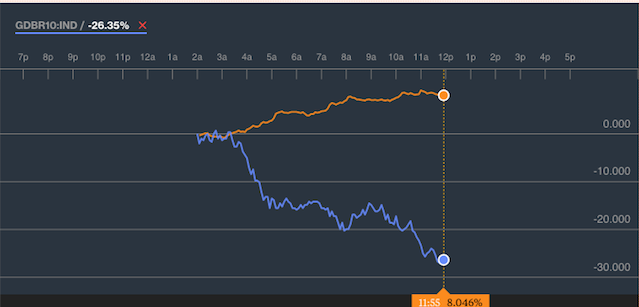
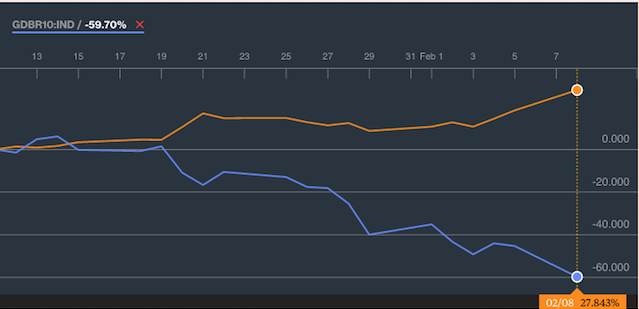
Portuguese-German Spreads Widen to 300bps

We are seeing a very enjoyable and serene widening of bond spreads between the aristocracy of Europe and the plebian nations. We haven’t seen this in quite some time, so it’s always an event whenever it does rear its hideously disgusting head. From past experiences with Europe, this will likely continue to a near snapping point, by which the ECB will be forced to act in order to save the whole god damned world.

Out of the PIGS, Portuguese spreads are widest v German bunds at 300bps. Therefore, by default, it is the proverbial ‘canary in the coal mine.’ We will watch it with great pleasure while eating popped corn, as the crisis develops– and envelopes the globe in terror.

Here is the 1-day spread between the haves and have nots.

Port-Bund1day

And here is the 1-mo spread

Port-Bund1mo

It’s worth mentioning that the PIGS’ yields are still incredibly low. They aren’t indicating crisis, only potential stress that might be developing in the European banking sector.

Comments »

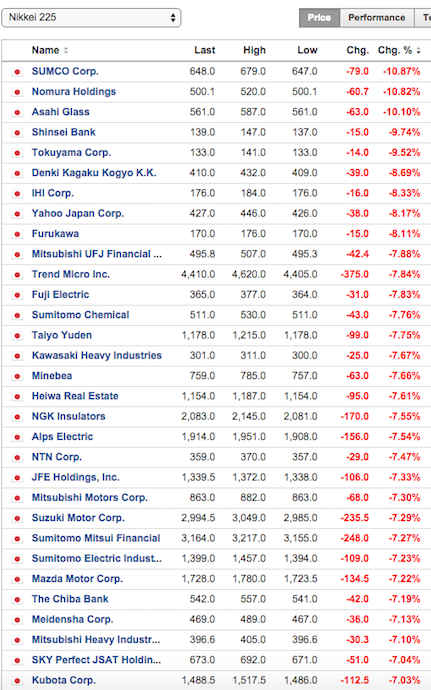
NIKKEI 225 Endures a Heart Attack Drop of 5% at the Open

The NIKKEI is being ransacked in early trade, to the tune of 850+ points or 5%.

Luckily, the Chinese and Hong Kongians (?) are out celebrating the year of the monkey this week, lavishing themselves with canine sushi and closed stock exchanges, as the world burns.

Here are some of the early losers in Japan tonight.

Japan


Dow futures are down over 100.

Comments »

Some Oil Drillers Are Stuck Stupid in Three Way Hedges

This is beautiful. Financial engineering at its best. Or in this case, financial engineering that got a little too sophisticated for its own good, which might lead to murderous rout of company share values.

Oil at $30 a barrel is blowing a hole in the insurance that U.S. shale drillers bought to protect themselves against a crash.
Companies including Marathon Oil Corp., Noble Energy Inc., Callon Petroleum Inc., Pioneer Natural Resources Co., Rex Energy Corp. and Bonanza Creek Energy Inc. used a strategy known as a three-way collar that doesn’t guarantee a minimum price if oil falls below a certain level, company records show. While three-ways can be cheaper than other hedges, they leave drillers exposed to sharp declines.
“At the time people hedged, they did it without thinking that oil would go to $28,” said Thomas Finlon, director of Energy Analytics Group LLC in Jupiter, Florida. “They didn’t have a realistic view about whether the market would crumble or not.”
The three-way hedges risk worsening a cash shortfall for companies trying to survive the worst oil crash in 30 years. The insurance is all the more important after oil plummeted 43 percent in the past year to $26 a barrel in January, exacerbating the pressure on debt-burdened producers.

And here are some individual cases.

Callon, ticker CPE (-24% YTD)

The trade has three parts. First, one option capped the best price Callon could get at $65 a barrel. Selling the right to profit if prices rise offsets the cost of protecting against a decline. The second piece established a floor price of $55, a guaranteed minimum that Callon would get paid even if oil fell below that point. By itself, this kind of trade, called a collar, would’ve ensured that Callon received $25 a barrel protection when oil is trading at $30.

However, Callon added a third element by selling a put option, sometimes called a subfloor, at $40 a barrel. Below that point, Callon essentially forfeits its protection. Instead of pocketing $55, the company is only entitled to the difference between the floor and that subfloor, or $15 a barrel in this case. At $30, Callon will realize $45 a barrel, $10 a barrel less than it would’ve received with a traditional collar.

If prices rebound above the subfloor, any disadvantage to the three-ways disappears.

“Our hedging program is part of our broader risk management efforts, and is designed to provide downside protection in a falling commodity price environment,” said Eric Williams, a spokesman for Callon. The price of oil futures through 2016 is at about $35, at which Callon’s three-ways would yield $50 a barrel, he said.

Pioneer, ticker PXD, (-8.1% YTD)

Similarly, Pioneer used three-ways to cover 65,000 barrels a day in the first half of 2016, or about a third of its projected output, company filings show. The strategy capped the upside price at $73 and guaranteed a minimum of $63, which would’ve ensured $33 above a selling price of $30.

However, Pioneer added a subfloor at $43. If oil’s trading at $30 a barrel, Pioneer will get about $50, or the market price plus the $20 difference between the floor and the subfloor. The difference adds up. With oil at $40, Pioneer will realize about $845,000 less every day than it would have using the collar with the $63 floor.

Bonanza, ticker BCEI, (-56% YTD)

Likewise, Bonanza Creek hedged 5,500 barrels a day for 2016, about 33 percent of its production, with three-way collars with a ceiling of $96.83 and a floor of $85. At $40, the trade would be worth about $55 a barrel, or $302,500 a day. However, Bonanza Creek also sold $70 puts, making its position worth just $15 a barrel, or $82,500 a day.

There are many more instances of this in the sector. Before going long, be sure to investigate oil hedge programs.

Comments »