iBankCoin
Home / 2016 / January

Monthly Archives: January 2016

The New Bubble: Negative Government Bond Yields

As society moves away from cash to paying for everything digitally, debt straddled governments are moving interest rates into negative territory. Essentially, this is a brazen tax being levied onto the public–to better perpetuate a false sense of stability in government balance sheets. By charging you to borrow your money, basic laws of nature and decency are are being egregiously discarded and burned at the altar of the banks. Eventually, the world spits out the crooked and the corrupt and replaces them with newer, less belligerent, forms of crooked and corrupt gentlemen. This is how the world has worked for thousands of years–yet we still have never landed on the moon.

At the present, more than $5.5 trillion in government bonds are trading with a negative yield. Theoretically, the more governments borrow, the more they make!

How splendid.

This is a very depraved and sordid scandal in the making that will end up with people in the streets with kerosine lanterns and pitched forks.

Here is a list of nations with negative 2yr bond yields, as well as nations approaching negative territory.

Austria -0.41% (85% debt/gdp)

Belgium -0.39% (106% debt/gdp)

Czech -0.09% (41% debt/gdp)

Denmark -0.21% (45% debt/gdp)

Finland -0.41% (59% debt/gdp)

France -0.38% (95% debt/gdp)

Germany -0.48% (75% debt/gdp)

Ireland -0.26% (110% debt/gdp)

Italy 0.01% (132% debt/gdp)

Japan -0.11%  (230% debt/gdp)

Netherlands -0.44%  (69% debt/gdp)

Slovakia 0.01%  (54% debt/gdp)

Spain 0.01%  (98% debt/gdp)

Sweden -0.55% (44% debt/gdp)

Switzerland -0.94% (up to 15yr durations now trading with negative yields) (34% debt/gdp)

United States 0.77% (102% debt/gdp)
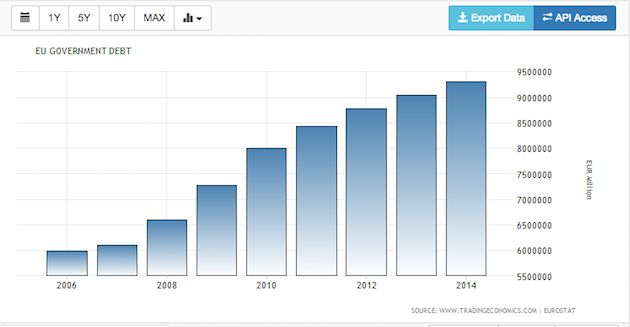
EUdebt

The only nations with government budget surpluses were Denmark and Germany, with Switzerland coming in at -0.10%. Everyone else is spending more than they’re taking in–like sailors of the drunken varietal.


Comments »

Hong Kong January Homes Sales Lowest Since 1991

This is definitely related to the spreads between mainland yuan and offshore. Nevertheless, the boiling hot real estate market in Hong Kong just got tossed into sub-zero temperatures.

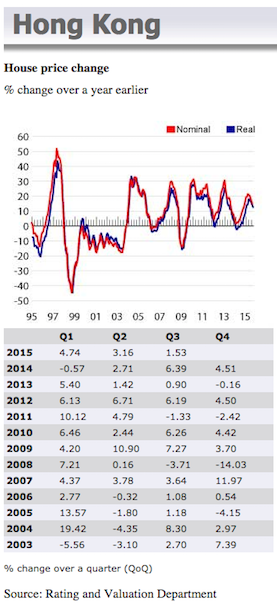
New and and secondary homes sales fell to just 3,000 units–the lowest figure since 1991. The lowest number in recent times was back in November of 2008, when 3,786 unit sales were recorded.

As you can see, real estate prices have been booming in Hong Kong, sans 2008, for quite some time.

Re Hong Kong

“The Hong Kong residential market is all about sentiment,” said Joanne Lee, senior manager of the Hong Kong research and advisory team at Colliers International Group Inc. “Falling stock-market prices, the economy weakening, China’s economy weakening and increases in the interest rate will all have an impact,” she said.

The Hang Seng is off by 0.3% and the Shanghai is off by 0.9%.

Comments »

CHINESE PMI CONTRACTS FOR A RECORD SIXTH CONSECUTIVE MONTH

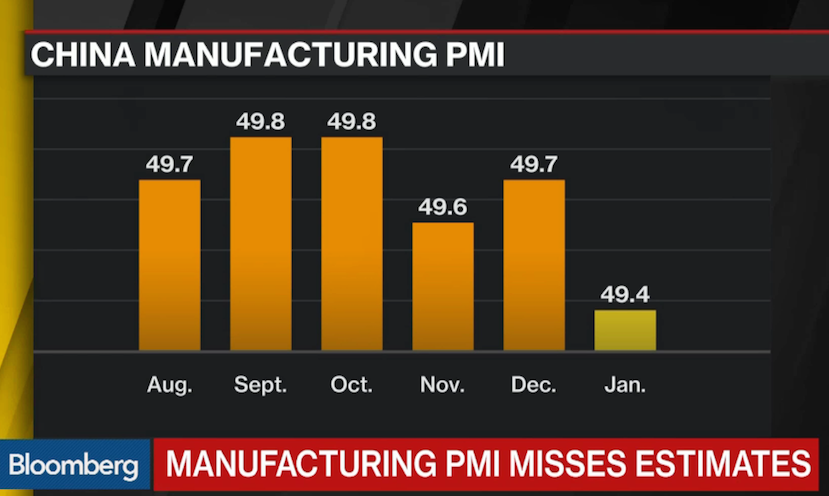
For the sixth consecutive month, the key gauge for the manufacturing sector in China contracted–missing estimates–painting an eloquent picture of a FOXCONN induced terror– ravaging the countryside of a coal infested atmosphere.
pmi

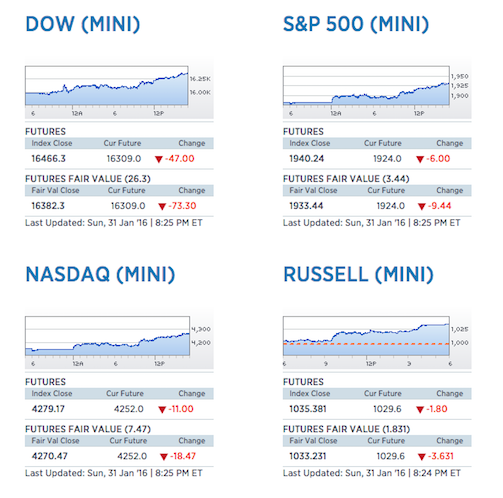
Related: U.S. futures are lower by 0.5%. Europe is set to feel the blade first, enjoying the first day of February as it did January–with heavy losses.
futures

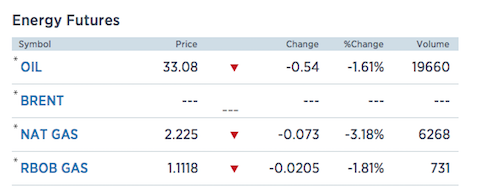
Commodities are getting the business too.

commodities

Comments »

Here Are 2016’s Winners and Losers, Thus Far

What a scandalous month, one that will live in infamy for eternity (extra drama club). For the site, traffic boomed, as persons of quality searched for expert opinions and to find news–pertaining to the commodity collapse of 2016. As for investors: they had their face knocked about–unless of course you were listening to me and heeded my most dire predictions of wanton cataclysm.

Here is some useful information, regarding the winners and losers of 2016.

Winners

Small Cap (-8.65% as a group)

SDPI +122%
SGOC +116%
HMY +91%
DRD +74%
BITI +72%

Mid Cap (-6.5% as a group)

SBGL +45%
AFFX +39%
WX +36%
OLLI +31%
BURL +25%

Large Cap (-5.1% as a group)

HCC +47%
FSL +45%
ABX +35%
AR +25%
AU +19%

Mega Cap (over $50 bill in cap) (-3.9% as a group)

DCM +10%
VZ +9.3%
TWX +8.8%
WMT +8.2%
RAI +8.2%

Losers

Small cap

ISH -88%
TKMR -70%
SRPT -69%
EGLE -62%
EGL -58%

Mid Cap

ALKS -59%
RARE -49%
HALO -49%
RDUS -47%
PBYI -46%

Large Cap

ETE -37%
MBLY -36%
INCY -35%
MDVN -32%
FCX -32%

Mega Cap

LFC -24%
AXP -22%
CX -19%
MTU -18.5%
GILD -18%

Top/Bottom performing ETFs

LABD +131%
BIS +53%
UVXY +36%
YANG +35%
FAZ +25%

———————————–

LABU -66%
BIB -39%
UWTI -37%
CHAU -36%
GASL -36%

Top/Bottom performing industries

Water utilities +7.9%
Gas utilities +6%
Foreign utilities +4%
Diversified utilities +4%
Gold +3%

————————————

Biotech -25%
Auto dealerships -25%
Shipping -23%
Diagnostic substances -20%
Drug delivery -19%

Performance by Sectors

Basic Materials -9.4%
Consumer Goods -5%
Financial -7%
Healthcare -11%
Industrial goods -7.2%
Services -6.3%
Technology -7.5%
Utilities +3.9%

Most Heavily Traded

BAC -16%
MSFT -0.7%
AAPL -7.7%
FB +7.2%
GE -6.5%

Raw Commodities

Gold +5.4%
Silver +3%
Corn +2%
Cattle +1.7%
Soybeans +0.5%

—————————-

Sugar -15%
Cocoa -15%
Gasoline -13%
Oil -12%
Palladium -11%

Comments »

Saturday Cinema with Le Fly: Rocky III (A Classic Wall St Tale)

Rocky III is my favorite Wall Street movie. It’s a tale about a guy who’s living high off the hog–rich hedge fund manager–ranked #1 by CNBC and Forbes magazine. He made his money during the great bull run, picking up stocks that moved with the market. Even though he came up from nothing, the success he enjoyed, while on top, led him to believe he was a genius–when in fact it was the market doing the heavy lifting for him.

His top analyst, an older gent, named Mickey, knew otherwise.

Mickey tried to warn Rocky of the coming bear market; but Rock wouldn’t listen. When preparing for it, Rock would listen to happy music, invite a bunch of friends and media over to watch him study–and generally take it easy. This drove Mick nuts, as he knew what the bear market meant and how it would affect Rocky’s flagship fund.

I won’t ruin this movie for you by giving away too much. But let’s just say, the bear market came, killed Mickey, utterly destroyed Rocky’s bullshit bull market portfolio, and forced Rock to rethink the very essence of who he was–get back to his roots by hiring an old retired hedge fund manager, who was once his greatest competition, to be his new analyst, and generally reexamine his entire approach to investing.

The bear market was hard and strong and didn’t give a shit about anyone. It just knocked shit down, took no prisoners, whirl-winning through the market place.

Here’s a clip of Rocky getting destroyed by the bear market

Comments »

Cashin: ‘It Won’t End Prettily’

Closing out a week of crazy tumult, let’s check in with the great iced cube marinator himself–Arthur Cashin.

He thinks this is a short covering rally–but it may have legs.

Not a fan of Japanese negative rates, saying ‘it won’t end prettily’.

Said one day, someone will go too far and “the currencies will go.”

Maybe I should buy some bitcoins.

Comments »

The Fairy Stock Father Grants the Market 107 NASDAQS

It was a solid day of short covering, on better than normal volume. Text books say we run another 2-3% before settling back in and down for a retest. Bear in mind, the currency wars aren’t done. As you enjoy the fruits of Fairy Stock Father’s labor and lavish yourselves with exorbitant gifts of degeneracy, remember the pain you felt last week–as your mind raced for ways to explain to your wife the sheer stupidity of your investment plan.

As for me, I wish I still had my 200% long SPY position. But a plan is a plan, and my sales are scheduled, etched in ancient tablets made from granite. I still have some exposure to SPY, 33% long with an additional 25% in TLT–which has done nothing but go higher. I will be selling the balance of my SPY position, as detailed in Exodus, on February 2nd.

FYI: The iBC online Boot Camp is right around the corner. Sign up now, before it’s too late!

Comments »

The Market Closes Out January with Worst Drop Since 2009; What to Expect From February

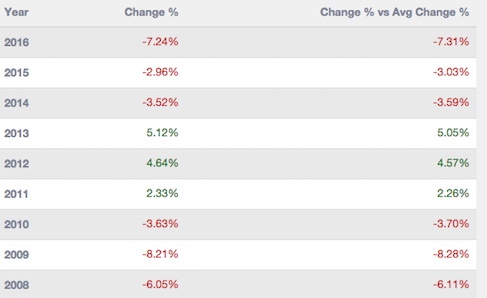
For the third year in a row, January is ending up a loser for stocks. The severity of this decline hasn’t been enjoyed by market players since the balling out days, when the lights were about to get turned off at the Treasury, of 2009. Those were grim days, indeed. So what’s next?

jan

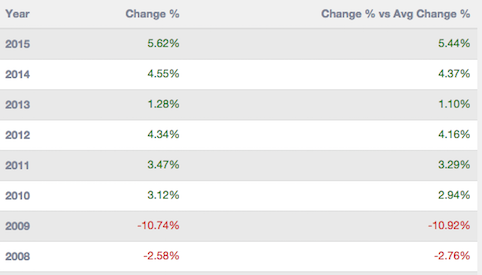
Naturally, history doesn’t always repeat itself, but often rhymes. With that in mind, it appears, either way we slice it, we’re entirely fucked for the month of February. Look at those 2008-2009 declines, boy (extra Raul).

Feb

data provided by Exodus

Or, maybe we relive the wonder year of 2014, a time and place when I had my single largest draw down ever, during the month of March.

Bottom line: I hope you’re enjoying the respite and have a mind about you to avoid diving into pools of hardened concrete.

Comments »

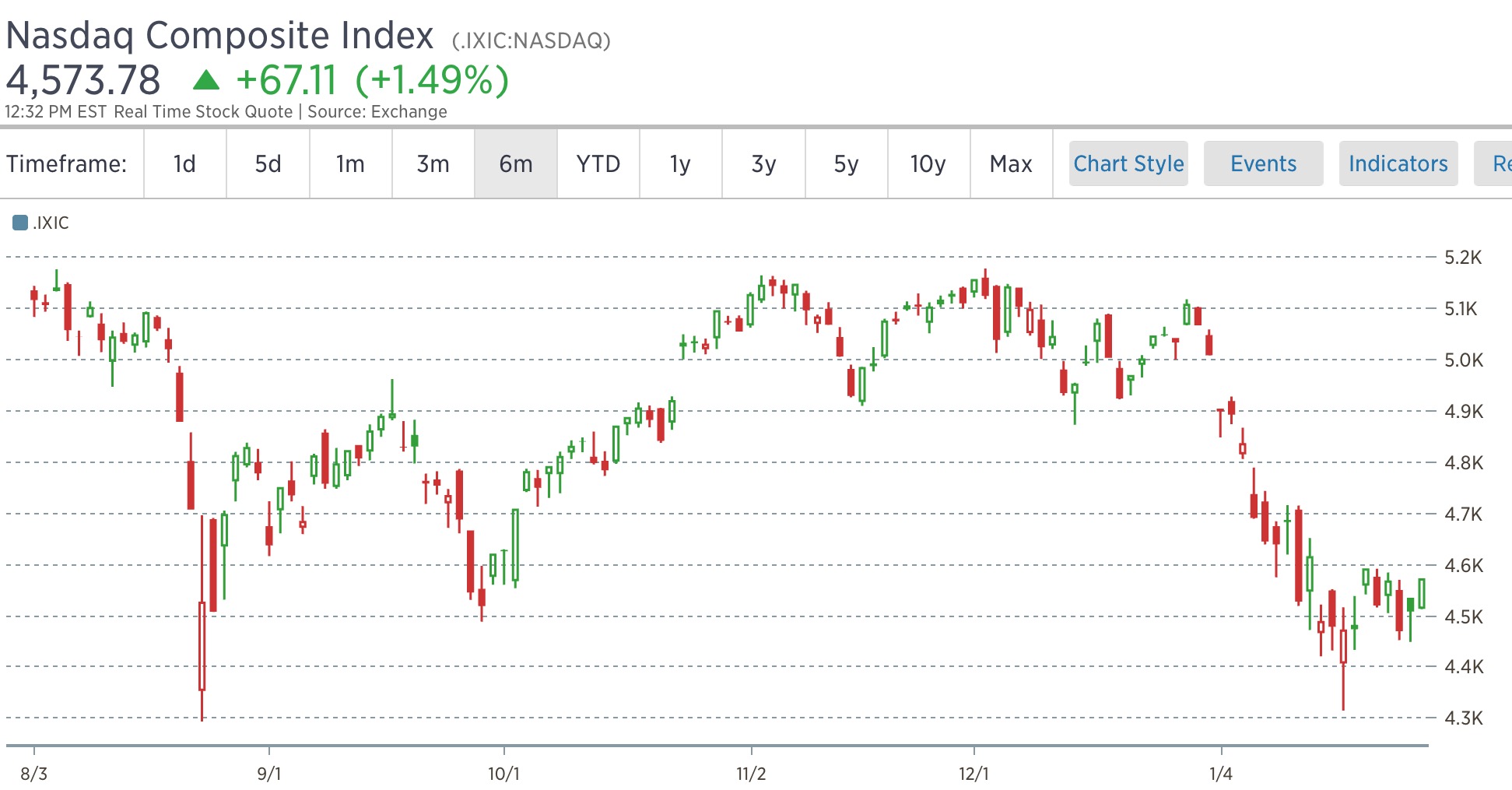
A Classic Bear Market Bounce Puts Us to 4,750 NASDAQS

Breadth is acceptable at 81%. There is broad participation in this rally. It has the feeling of pent up frustration being released out into the world. This is an angry move higher, designed to inflict damage to shorts.

Taking a look at the NASDAQ, clearly today’s move doesn’t even put a dent in the magnitude of the decline we’ve just had.

image

If this is a bear market, rallies are a natural occurence–but they’re always short lived. We moved from 5,100 to 4,400, a total loss of 700 NASDAQS. I can see this rally getting us back up to 4,750–before heading back south again.

Remember, we always retest, not matter what. That 4,400 mark will be tested again, trust in that.

In the interim, we have a stock and bond rally going at the same time. Talk about twighlight zone. I’ll take it, since I am 33% SPY and 25% TLT.

The market is giving you respite, but smart money is buying up yield, which is why REITs and utilities are doing so well.

Comments »

Cramer: ‘BOJ Actions Are Bad For Us’

I talked about this earlier this morning. The Bank of Japan’s actions are not in our best interest. They are manipulating their currency, in an effort to steal market share. Ultimately, we lose when the yen drops v the dollar.

Cramer hones in on this and ponders as to why traders are viewing this in a positive light.

Comments »