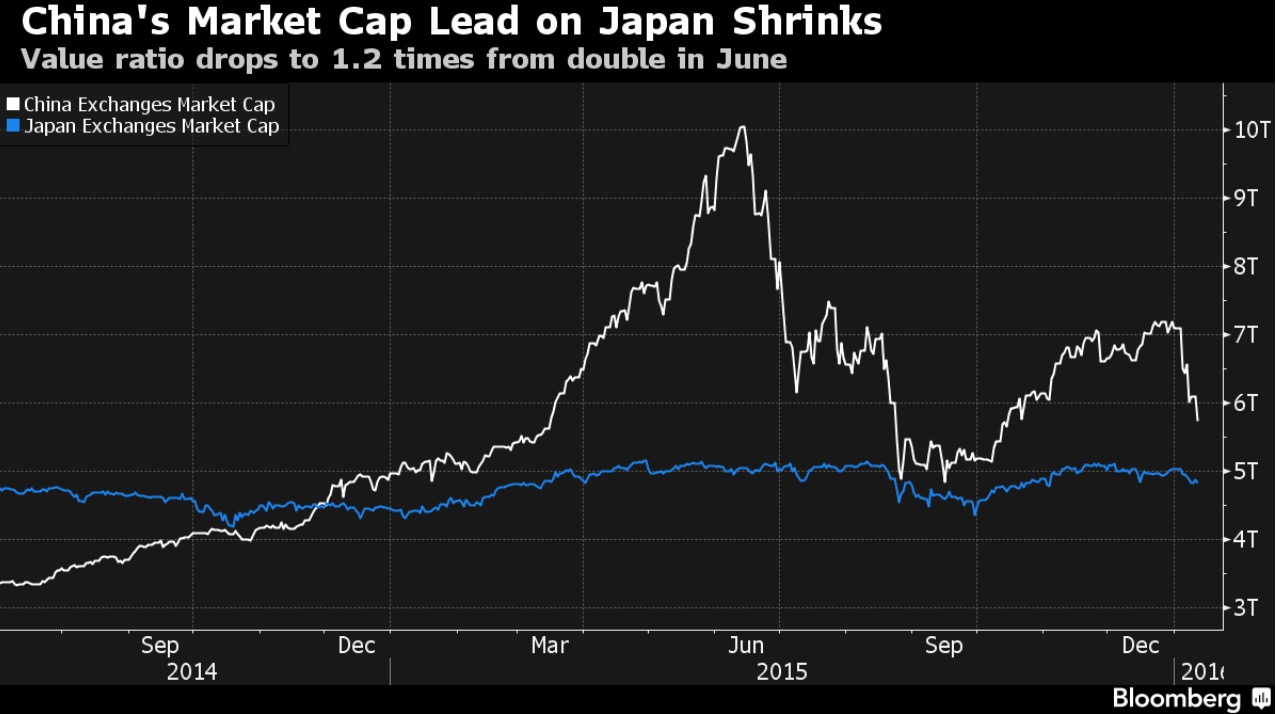
Recent market calamity has measurably narrowed the market cap gap between China and Japan.
China’s combined market capitalization was double Japan’s on June 12, when the value of stocks trading on Chinese equity exchanges briefly exceeded $10 trillion. The ratio narrowed to 1.2 times at yesterday’s close.
Perhaps the new bottom of the Chinese market will be when it reaches parity with Japan? I’m sure we’ll find out soon.
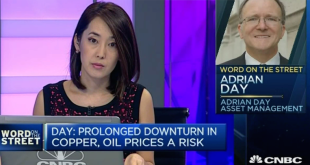
I have to admit feeling the same as Mr. Day, despite the horrid pin action in the stock. The company is a free cash flow generating machine and should be able to weather the storm, providing copper stops bleeding out. It’s worth noting, however, the recent rout in FCX has pushed debt/eq levels up past 3x, a dangerous game to play with the amount of debt Freeport has on its books.
Being that I sold the shares substantially higher towards year end, I am tempted to go long down here. However, I made a commitment to remove non-systematic risk from my portfolios in 2016, so I’ll have to watch the likes of Carl Icahn “have all the fun” in FCX for the time being.
In all fairness, he could’ve dumped his entire fund into FCX puts and made a bundle. But, more likely than not, a Mr. William Albert Ackman is simply idled in his luxurious office taking hits.
Some rough math here, as the institutional holdings data in Exodus is being updated right now, it looks like Billy could be down almost 10% for the year, matching his pals from Greenlight Capital and Valueact, as well as his nemesis Carl “give me three board seats” Icahn.
According to recent filings, here are Ackman’s largest holdings and YTD returns.
QSR -15%
VRX -15.2%
PAH -31%
ZTS -7%
APD -8%
MDLZ -7%
HHC -7.5%
HLF (short) -6% (yay!)
Icahn’s holdings are simply perverse.
LNG -8%
AAPL -6%
FCX -36%
PYPL -8%
HLF -6%
FDML -18%
HTZ -19%
Einhorn’s Greenlight looks to be off to another bad start.
AAPL -6%
MU -11%
KORS -7%
SUNE -34%
DDS -4.7%
CNX -12%
GM -11%
TWX +8%
CBI -7.5%
GRMN -10.3%
As for Valueact (I’m bored by now)
VRX -15.2%
ADBE -4.4%
HAL -7.1%
MSI -5.6%
BHI -10%
CBG -13%
You get the picture. It’s a damned bloody start to the new year.
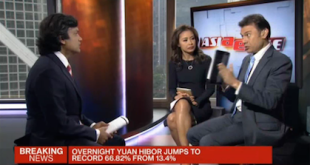
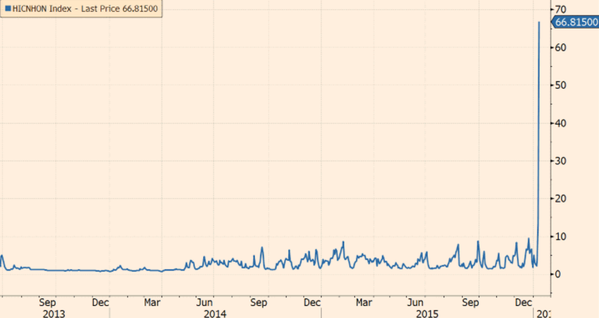
This is officially a credit crisis of interbank lending between China mainland and Hong Kong.
HIBOR was already absurdly priced last night at 13.4%; tonight it went full retard and blew out to 67%.
Separately, but related, Chinese citizens are scrambling to get out of their yuan in exchange for dollars. People on the ground say, over the past two weeks, they’ve seen a 40% spike in money changer services. The average flight out of China is 200,000 dollars.
The Shanghai is ignoring the news, flat for the session–so far.
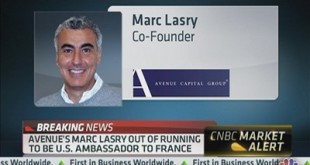
Junk fund manager Marc Lasry no longer finds it necessary to report his asset levels to Lipper or Morningstar. His performance has been so dreadful, so cataclysmic, losing 40% of its assets since October on a -13.5% 2015 return or worse than 98% of his peer group, I am sure he’s closing the whole kit and kaboodle up, in order to go spend his billion dollar personal fortune in peace, without the distraction of having to lose the retirement funds of overzealous old folk in search of yield.
The Avenue Credit Strategies Fund has lost about 40 percent of its $1.2 billion in assets since the end of October. The fund currently has about $650 million to $700 million in assets, with about 15 percent in cash holdings and less than 5 percent in illiquid investments, according to people familiar with the situation. Avenue Capital was not immediately available to comment.
Research chiefs for Morningstar and Lipper said on Monday they had not received daily asset under management figures from the Avenue Credit Strategies Fund (ACSBX.O) since about mid-December. The fund is not required to report the figures, but not doing so is “very unusual,” said Jeff Tjornehoj, head of Americas research for Lipper, a Thomson Reuters unit.
People familiar with the situation said outflows from the Avenue Capital fund had become a distraction after an unrelated junk bond fund in early December imploded. Junk bond investors already were on edge, pulling $3.6 billion from high-yield funds in November, according to Morningstar data.
Like the Third Avenue fuckery, the market might view this as somewhat worrisome. Where there’s smoke, there’s a whole fucking village burning down.
It is time. I haven’t pulled Peter Schiff out from the woodworks since the world ended in 2009. Lo and behold, he is back, bringing forth his brand of excessive gloom, suggesting “we’re going MUCH, MUCH LOWER” and how this bubble is twice the bubble of the previous two combined (lolz).
Also, he lays waste to the token bull he was debating. It was like watching Macho Man Randy Savage defend the Intercontinental title against some random throw in named Tom Stone.
I especially like when Schiff laughed at the fat guy for wanting to buy dips, dismissing him completely by not even acknowledging his existence.
Some highlights.
We’re in denial.
QE4 is coming.
The Great Recession is about to resume.
We’re going to die of the Fed’s cure.
The economy is in lousy shape.
This is as contained as the mortgage crisis in 2007.
The man from Virginia Beach toils away, day in and day out, to provide you with actionable, and very sagely posts, regarding the price of crude oil and oil, denominated in over 50 currencies, and all you do it throw your teevee dinners at him, whenever he comes on the tube.
Today he declared oil to be completely screwed, with producers in the streets. He cited small pockets of oil dubbed “Western Canadian Select” for whoring their oil for a pittance of just $14 (lolz), and how it’s literally fucking WTI. I truly don’t think Western Canadian Select is having all that big an impact. Then again, I’m not Dennis “In Winning Terms” Gartman, am I?
Dennis posits oil will crater, the fuck, down to ‘egregious levels’–$15 to $18, at which point it will then become a buy. Also, Dennis says China is no longer filling up their reserves and how the Saudis and Iraqis are retarded, leaving the onus on U.S. frackers to act responsibly and cut production.
Pressure remains on crude and we’re now entering margin call panic trading.
There’s an old urban legend that says the Dutch bought the island of Manhattan from the Lanapes for some beads and $24. Over the centuries, that $24 has remained constant, untouched by inflation and the possibility that the Lenapes could’ve taken that small sum of money and invested it wisely. As a point in fact, had the savage Lenape set up trust accounts and invested the $24 over 350 years, it’d be worth $64 billion–a decent sum of coin for the crime infested rat hole called Manhattan.
Fast forward to today and everyone is talking about how the level of share buybacks are indicative of a market top. I think there are lots of reasons why the market topped, none of which have anything to do with buybacks. Also, these morons aren’t factoring in massive earnings and revenues gains from the previous cycles.
Revenues and earnings are up huge since the last cycle top. The buybacks we’re seeing today are wasteful, idiotic, and completely devoid of rational thinking; but they’re nothing special when compared to previous cycles.
I bought more spy, delving into leverage–following the mandates dictated by Exodus.
It’s a dark world out there, as Brent crude breaks the backs of our friends in the Saudi fields, in real time. Everything is crashing, but stocks.
LISTEN TO ME: THERE ARE 10,000 REASONS TO CRASH THIS FUCKER INTO THE ROCKS; but we’re rallying instead. A tradeable bottom is in.
I still have a a full position in TLT, which is 25% of my assets. My only other position is SPY, as I prefer to eliminate stock specific risk for the entirety of 2016.
This is my 4th SPY purchase. My basis is a touch over $196.
Don’t you love when analysts wait until a stock is down 80% to downgrade them to neutral? That’s exactly what the Australian investment bank did today with FCX. Being that Australia is a kangaroo and a copper mine, when analysts talk metals over there, the world tends to listen.
The research note did nothing but sing praises for Freeport’s “world class” mines and unique blend of awesomeness. If the company could get a better handle on its debt, well, they’d be inclined to be measurably more optimistic.